
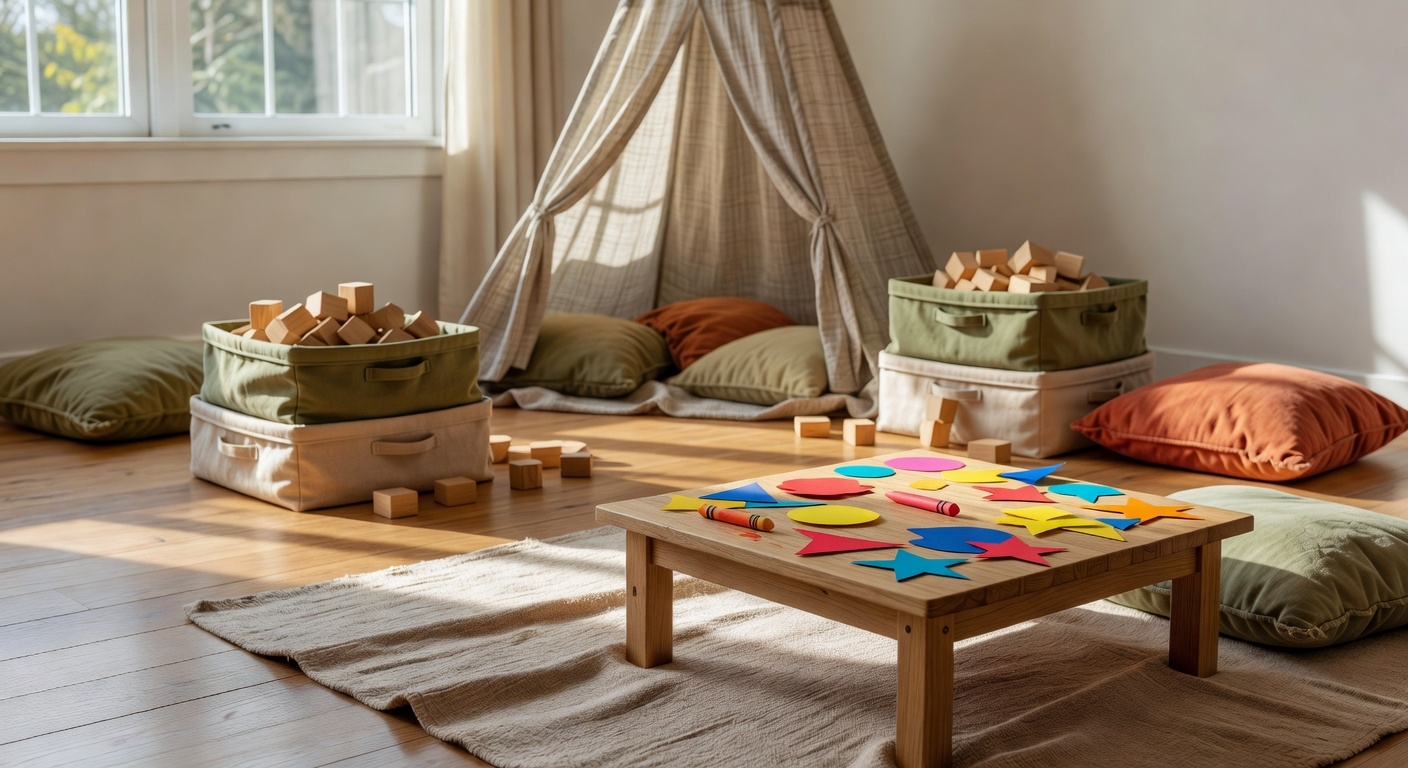
You can turn your living room into a mini‑lab where kids sprint, crawl, and think, all while you guide them with clear steps and a grin. Set up a soft‑pillow tunnel 6 feet long for balance practice, then snap a cardboard maze 3 feet wide for spatial reasoning. Tape a 4‑foot balance beam for counting steps, and drape a fabric “river” for fine‑motor crawls. Each station has a measurable goal, like staying on the beam for 10 seconds, so you’ll see confidence blossom. Ready to explore the next inventive challenge?
Relay Tunnel With Soft Pillows For Balance Practice
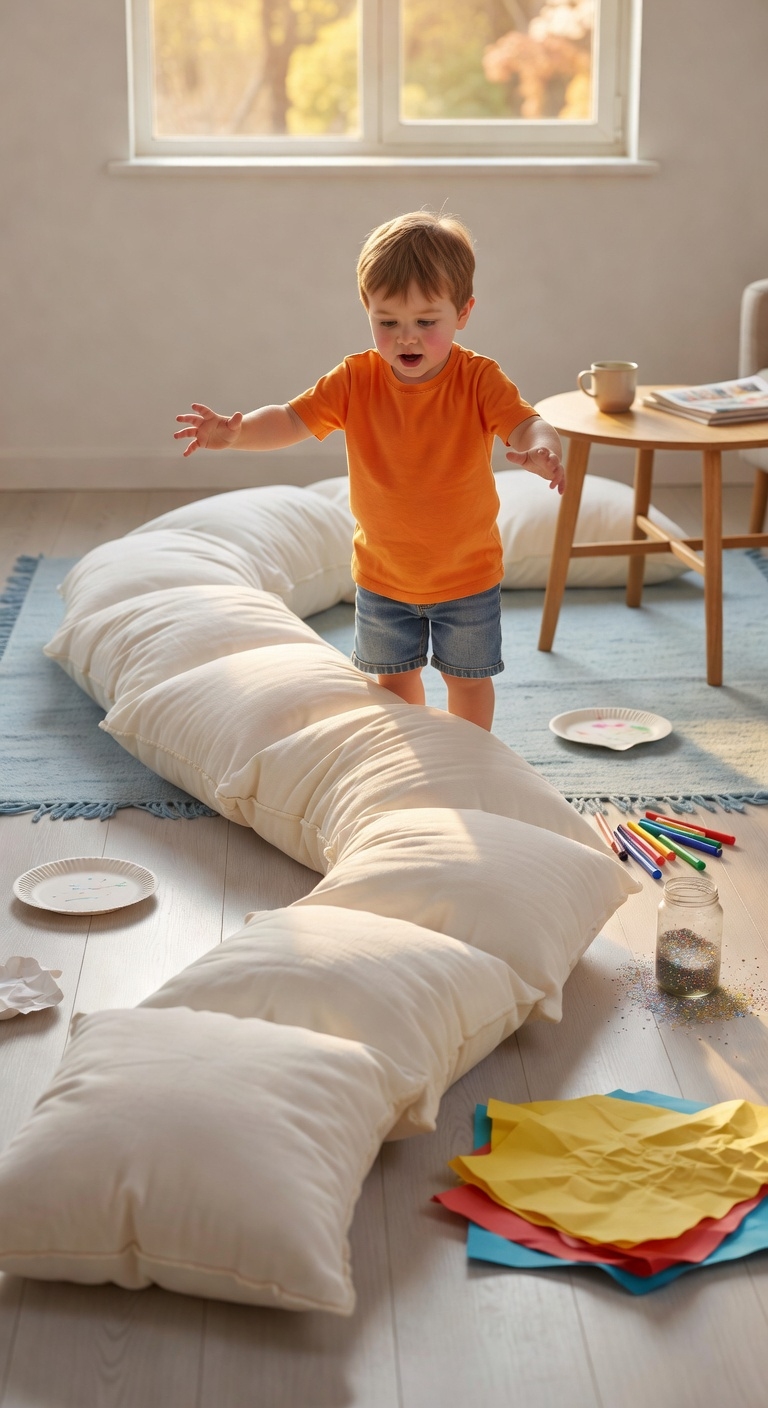
When you set up the relay tunnel, start by lining the hallway with a row of soft pillows about 12 inches wide and 18 inches long, spaced just a few inches apart so kids can step or crawl without slipping. Build a pillow fort at each end for excitement; this soft play zone encourages balance, confidence, and giggles. Test the path, cheer loudly, and watch them navigate safely! Consider adding natural items like leaves or small branches around the obstacle course to encourage observation and exploration of nature while they play.
DIY Cardboard Box Maze – A Sensory Play Activity For Spatial Reasoning
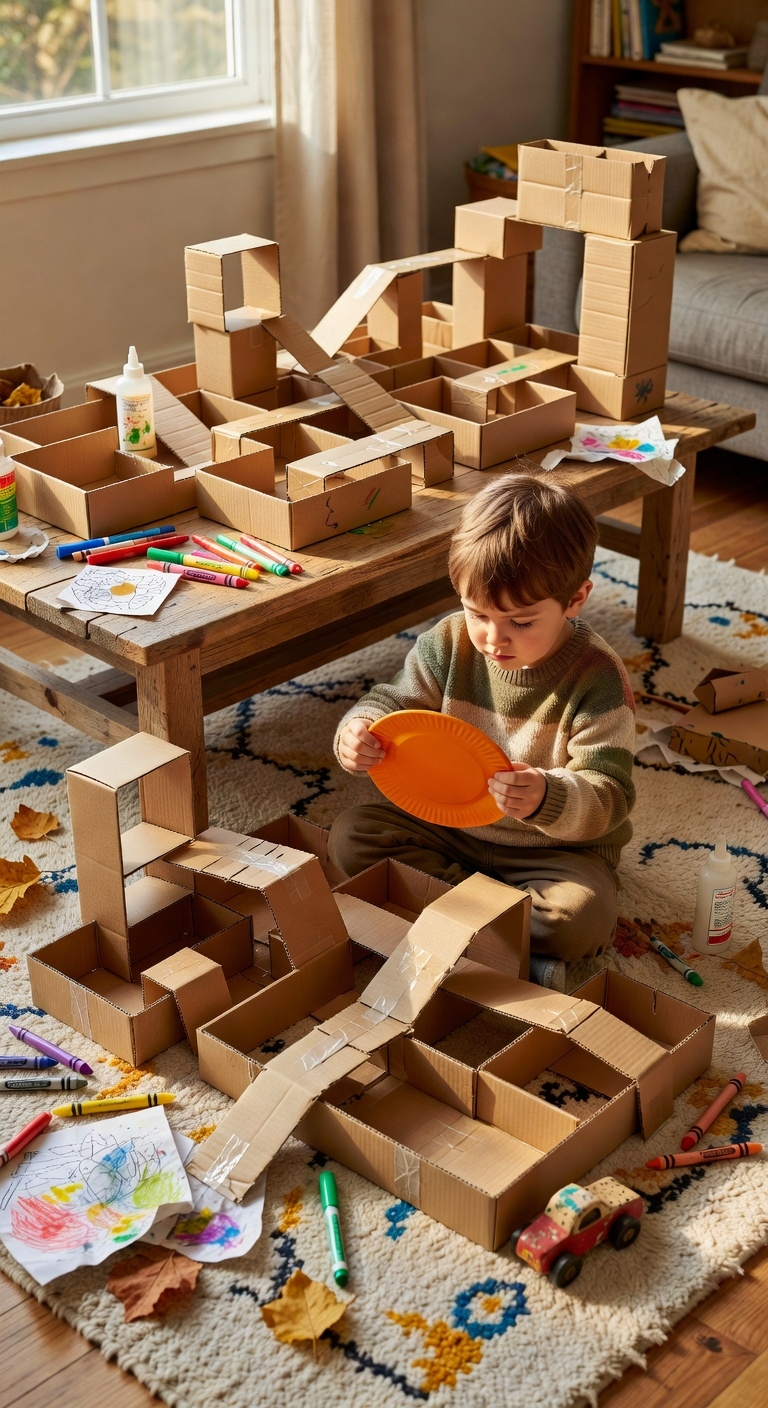
If you gather a few sturdy cardboard boxes, you can turn a simple hallway into a thrilling maze that sharpens spatial reasoning and tickles the senses! Cut openings 12‑inch high, tape edges securely, and line the path with soft rugs for sensory integration. Encourage kids to crawl, turn, and pause, boosting spatial awareness. Celebrate each correct turn with cheers, your living room becomes a safe, exciting adventure! For added sensory engagement, consider decorating the maze with natural materials like leaves and branches to enhance the tactile experience.
Tape‑Line Balance Beam For Early Counting Steps
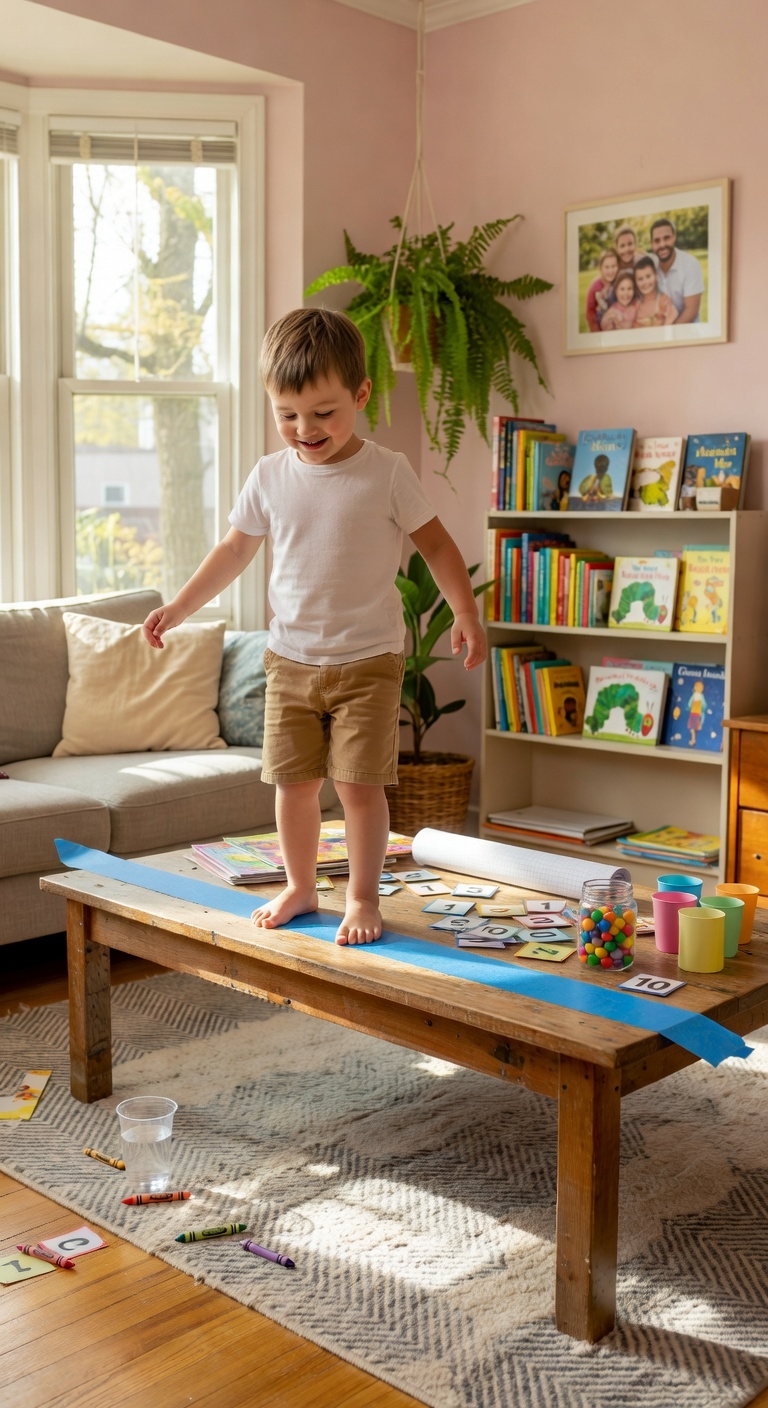
After the cardboard maze, you can keep the momentum going with a tape‑line balance beam that doubles as a counting adventure. Lay a 4‑foot strip of bright tape on the floor, spaced inches apart. Encourage color recognition by using different hues for each number. Enforce safety precautions: secure the tape, keep the area clear, and supervise. Count steps aloud, celebrate each correct number, and watch confidence soar! This creative learning activity works especially well during family gatherings where children of varying ages can participate together and support one another.
Fabric “River” Crawl With Streamers To Strengthen Fine Motor Skills
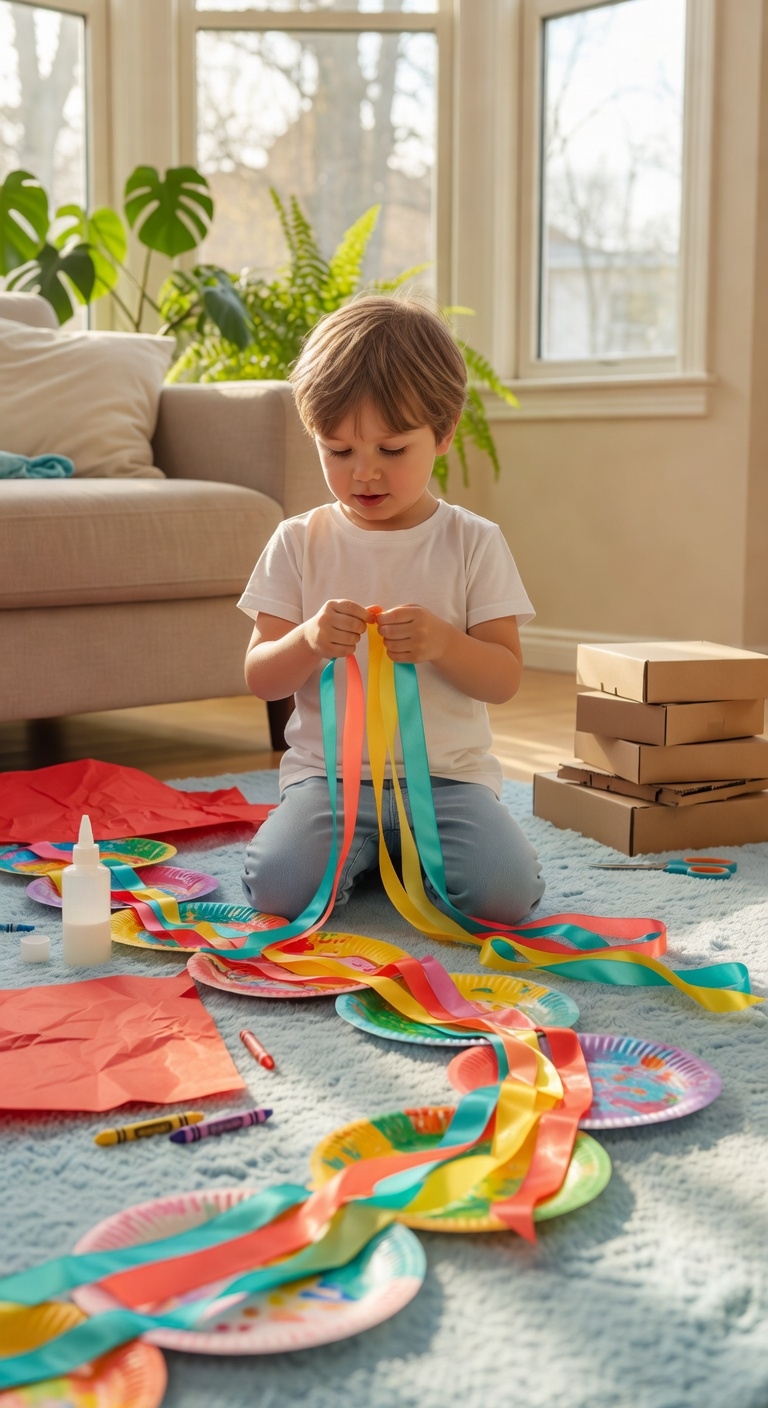
Stretch a long piece of soft fabric across the floor to make a “river” that kids can crawl through, then attach colorful streamers that flutter like water‑lily leaves as they move. Secure edges with non‑slip tape, keep height under 6 inches, and let children grasp streamers, boosting fine motor control. This sensory integration activity encourages confidence, giggles, and graceful crawling, watch them explore safely! By incorporating fine motor activities into obstacle courses, you create engaging learning opportunities that develop hand-eye coordination and dexterity in preschoolers.
Progress From River Crawl To Standing Balance Games
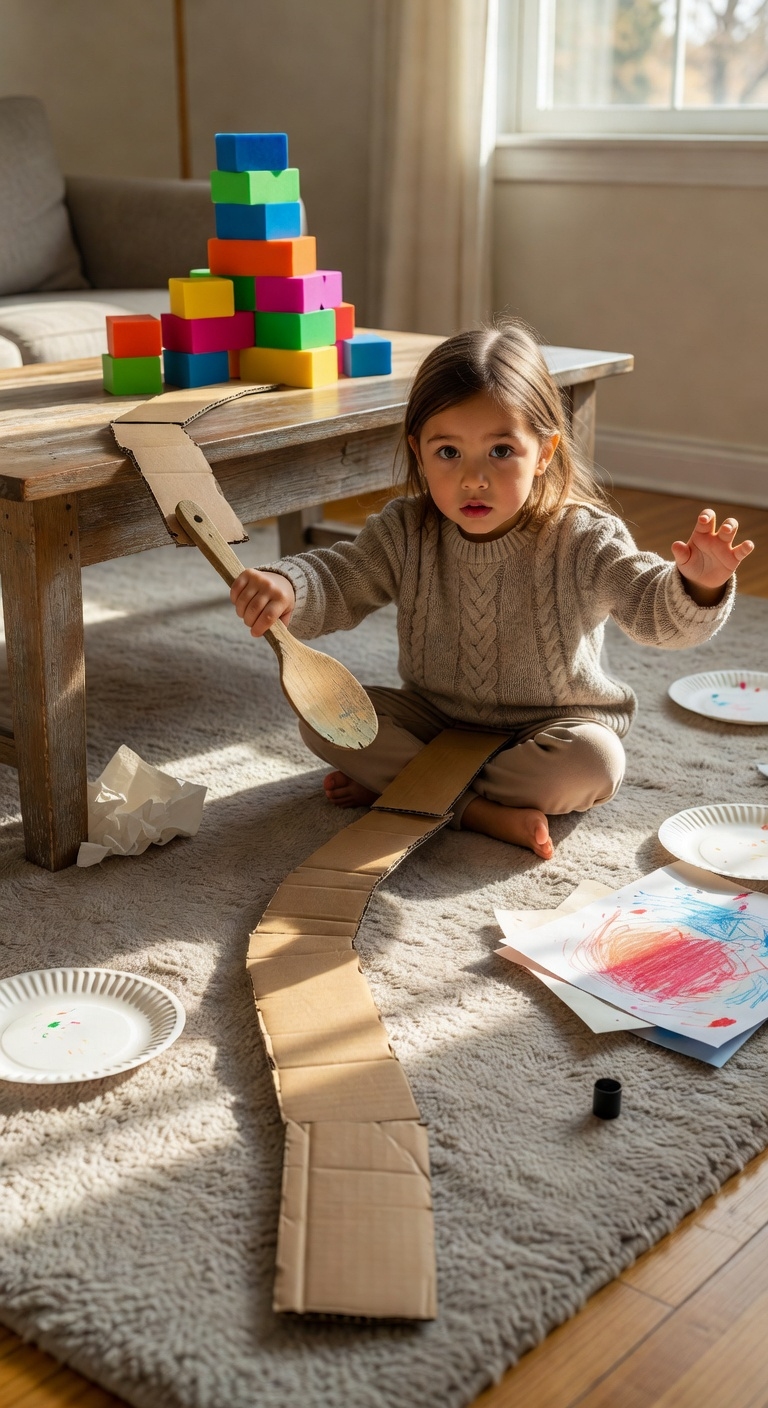
When the river crawl feels like a breeze, gently transition to standing balance games by lowering the fabric “river” and placing a sturdy, low‑profile mat just a few inches away. Encourage kids to step onto the mat, using water safety cues and sensory bins nearby for tactile feedback. Keep the mat non‑slip, measure a twelve‑inch gap, and cheer each steady step! These circle time games create structured transitions that help children build confidence in their physical abilities while maintaining engagement through playful activities.
Stack‑and‑Jump Foam Block Tower For Geometry Exploration
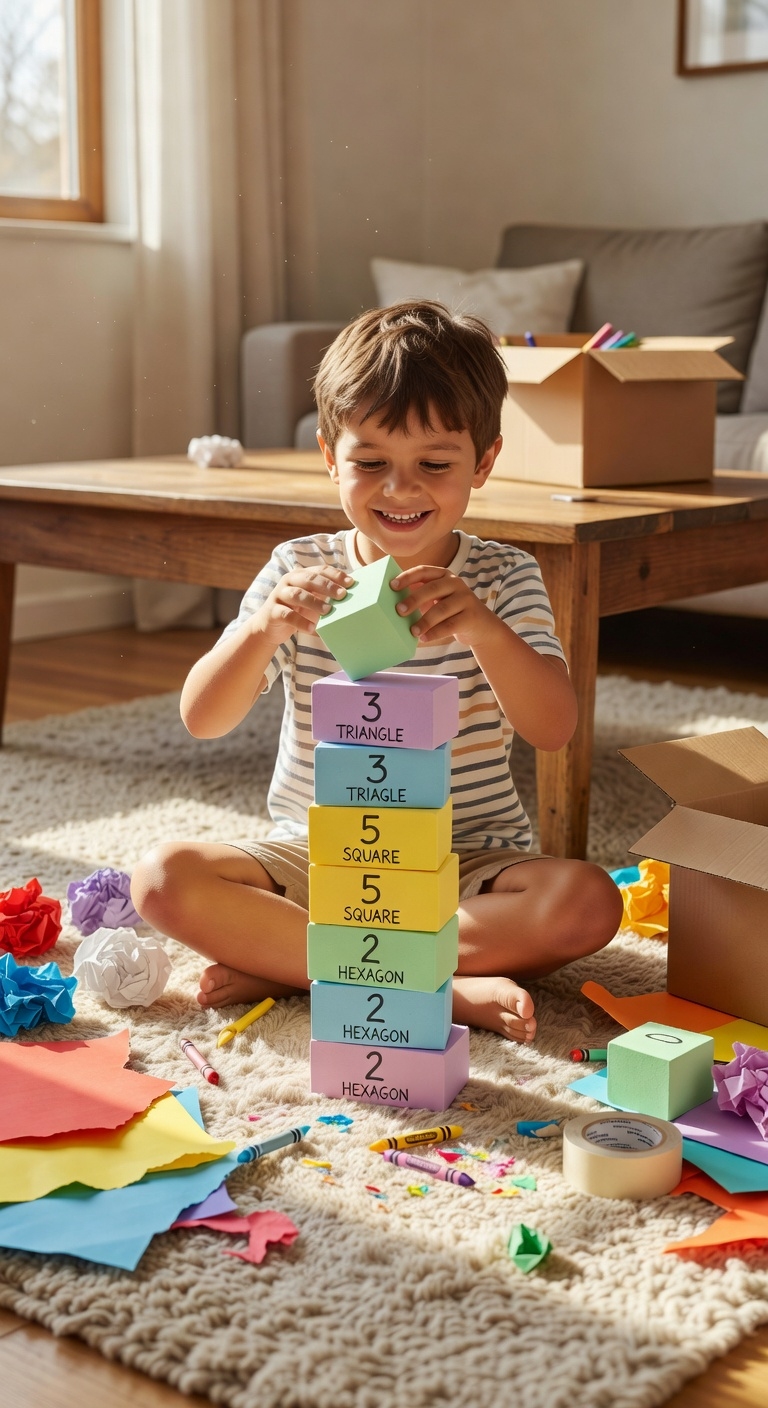
The river‑crawl mat can stay nearby as a “safety zone” while you build a foam‑block tower, so kids feel secure before they start leaping. Guide them to arrange rectangular foam blocks into a sturdy column, then add a second layer at a right angle, this creates Geometry puzzles that reinforce spatial reasoning. Encourage gentle Foam Foam stacking, noting that each block should be no taller than 6 inches. Celebrate their triumphs with cheers!
Blanket & Light Sensory Tunnel For Color Naming
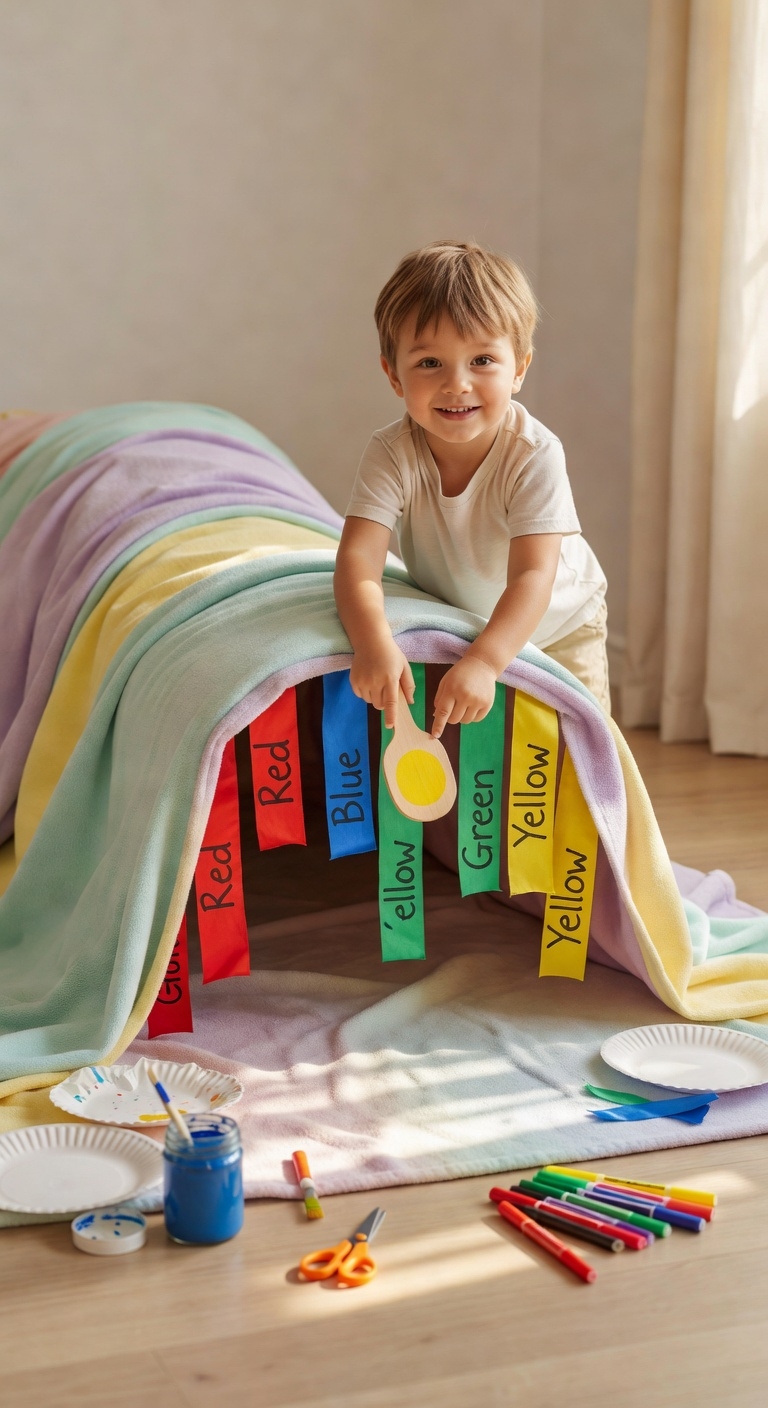
If you drape a soft, oversized blanket over a low‑profile frame and slip a string of gentle LED lights through the opening, you’ll create a cozy sensory tunnel that turns color naming into a playful adventure. Secure the blanket with Velcro, keep the LED cord out of reach, and place colored foam blocks inside. Kids crawl, see sensory color cues, and practice visual stimulation, naming each hue with confidence!
Alphabet Scavenger Hunt On Cushions For Letter Recognition
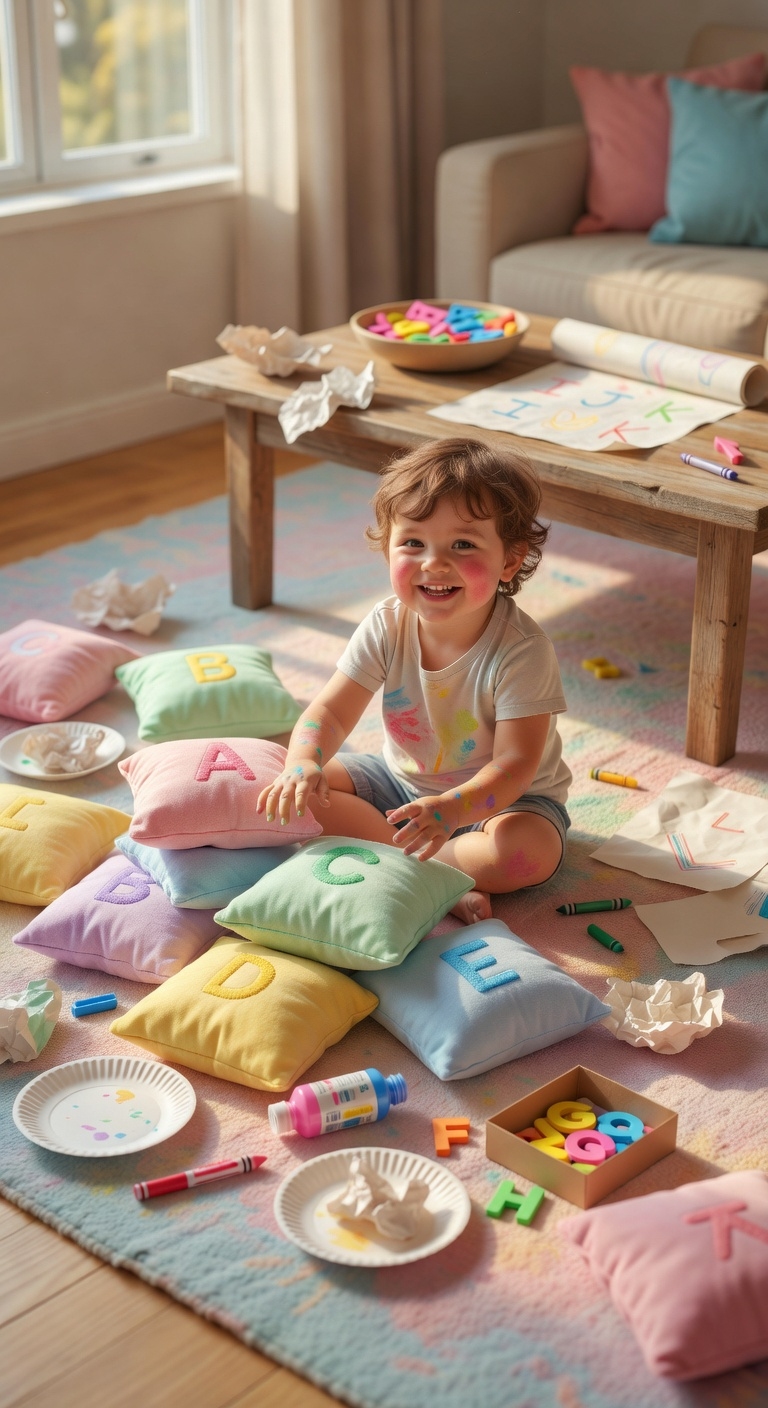
Even though the living room feels like a giant playground, you can turn ordinary cushions into a lively alphabet scavenger hunt that sharpens letter recognition. Begin with cushion clearing, spreading them evenly, then attach bright Letter labeling tags. Kids hop, find, and call each letter, reinforcing phonics. Keep cushions firm but soft, and celebrate each correct shout with enthusiastic applause!
Lego Bridge Challenge To Spark Engineering Thinking
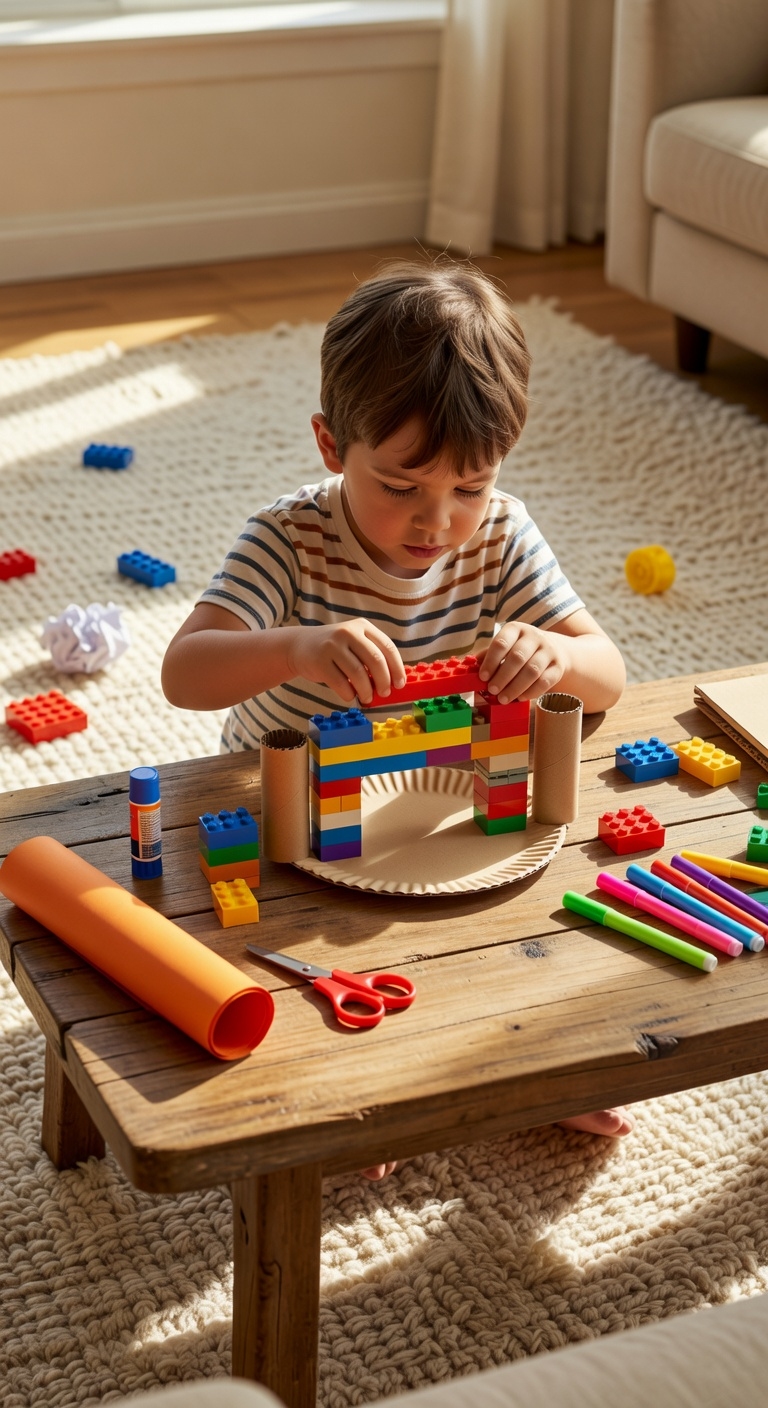
After the alphabet hunt, grab the cushions and lay them out as a sturdy foundation for a LEGO bridge. Build a low‑rise lego bridge using 2‑inch blocks, testing each joint before adding weight. Encourage engineering thinking by asking, “How many bricks can support a toy car?” Celebrate each successful span, and keep edges padded for safety. You’ll see confidence grow!
Piano‑Tile Step‑Stone Path For Rhythm And Timing
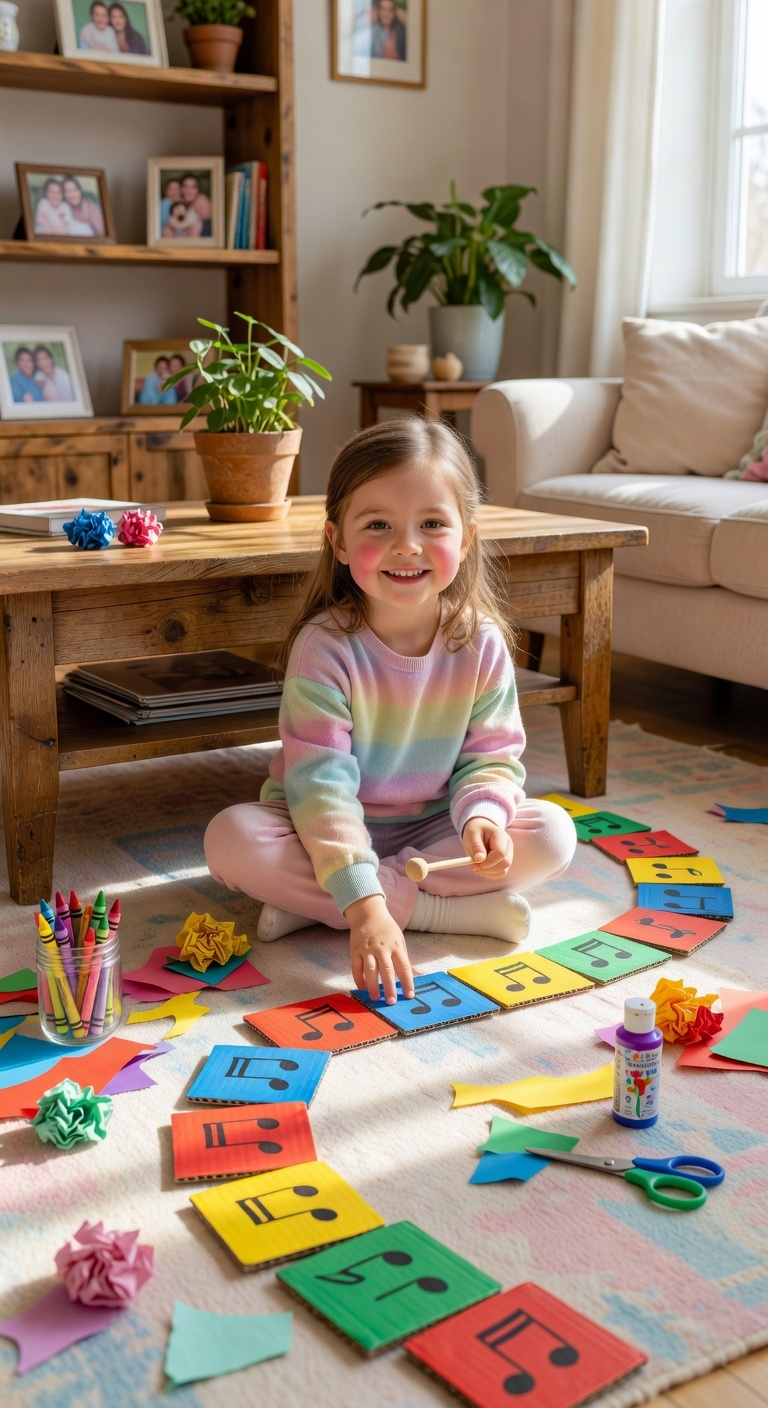
When you line up the cushions like stepping stones, you’re creating a piano‑tile path that teaches rhythm and timing. Choose non‑slip mats, space them 12‑inch apart, and mark each with a bright circle. Encourage kids to hop to a steady beat, counting aloud for rhythm practice. This simple routine boosts timing development, builds confidence, and sparks joyful movement!
Build A Magnetic Track Race To Explore Simple Physics
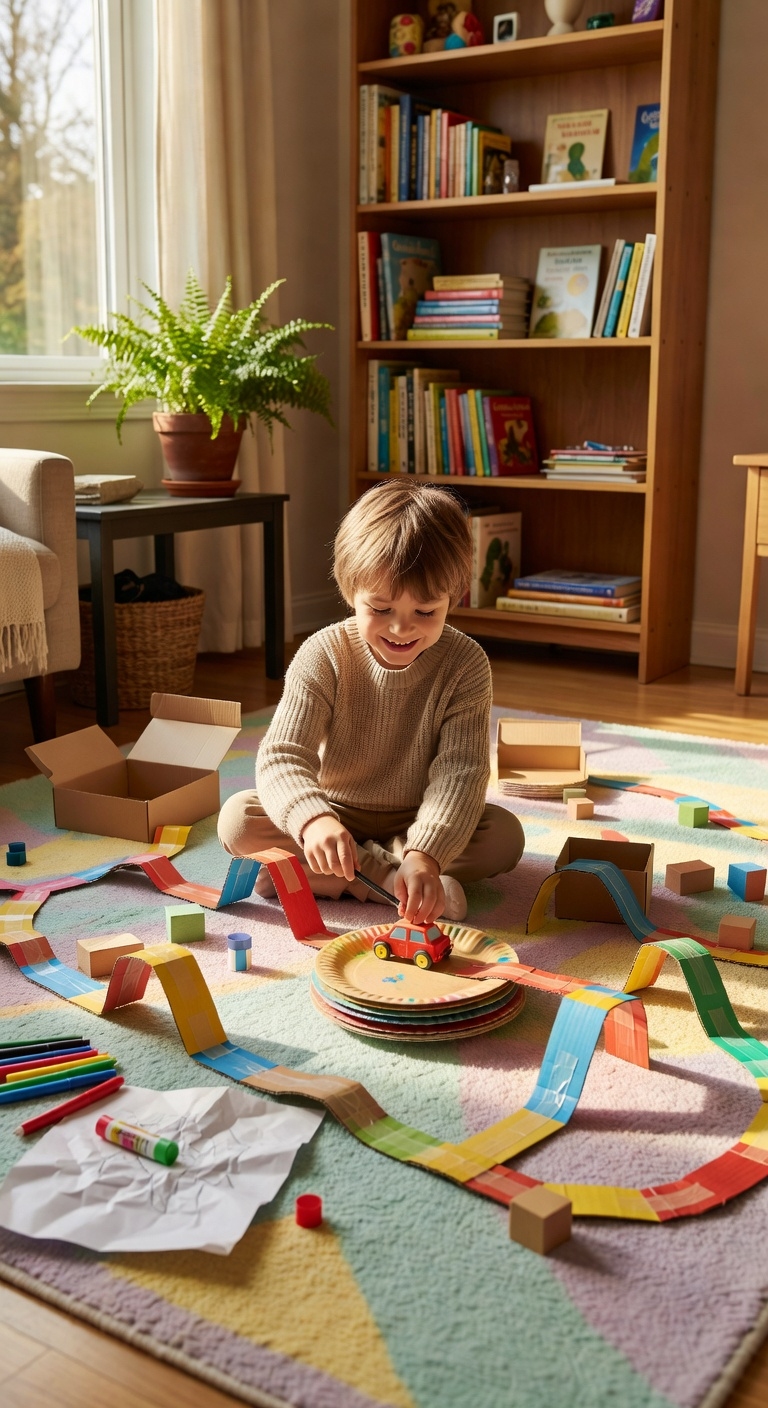
If you set up a magnetic track race, kids will see how invisible forces pull objects along a path, like a tiny train that never runs out of fuel. Choose sturdy cardboard, tape a magnetic strip, and attach lightweight metal cars. Ensure edges are smooth, keep curves gentle, and test the Track physics. Measure 30‑inch loops, cheer loudly, and watch confidence zoom!
Number‑Balloon Pop Obstacle For Adding Practice
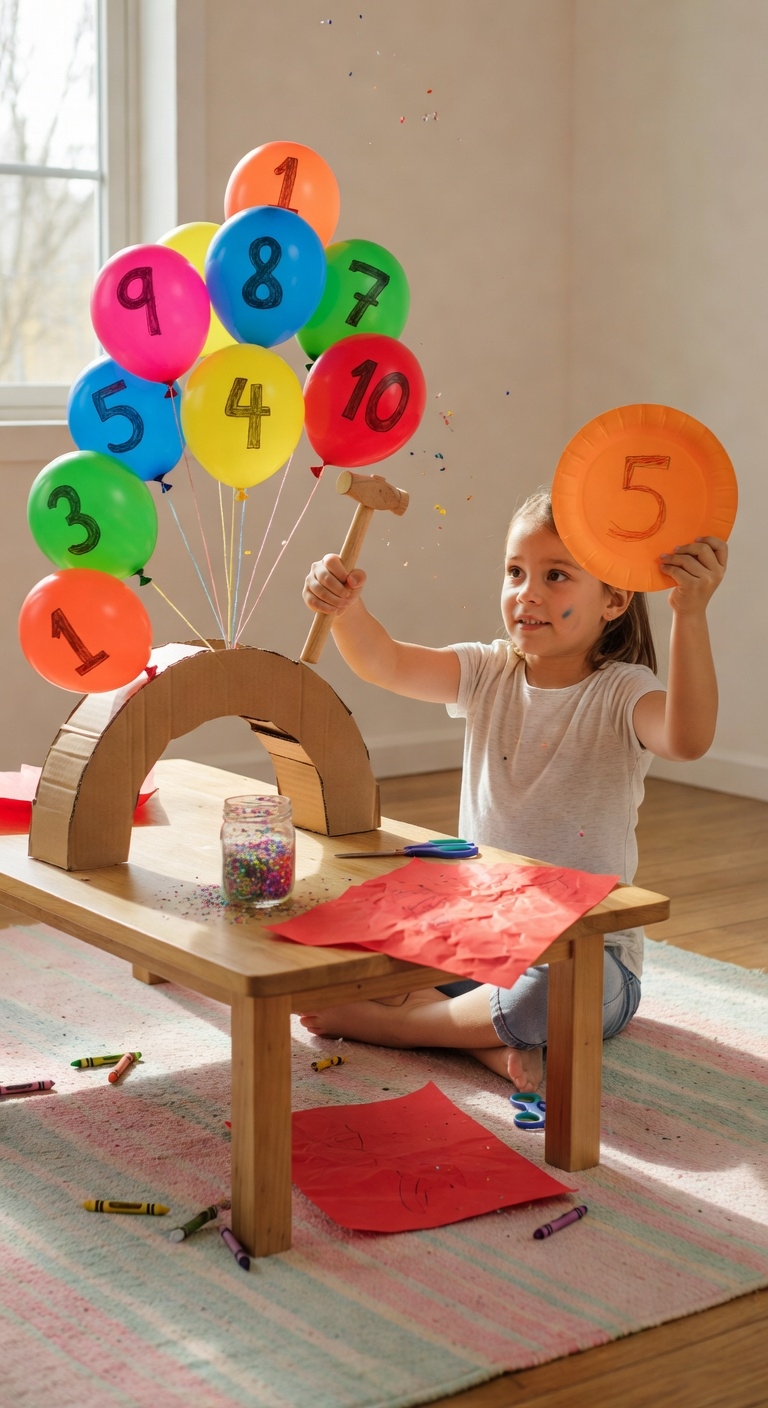
Even though the balloons look like ordinary party décor, they become powerful math tools when you turn them into a Number‑Balloon Pop obstacle. Inflate 12 balloons, label each with a number, and anchor them 18‑inch high using soft hooks. Ask kids to pop balloons in ascending order, adding each pair aloud. This safe, lively activity reinforces number practice, sharpens hand‑eye coordination, and celebrates every correct sum with cheers!
Flashlight “Shadow Light” Crawl For Shape Identification
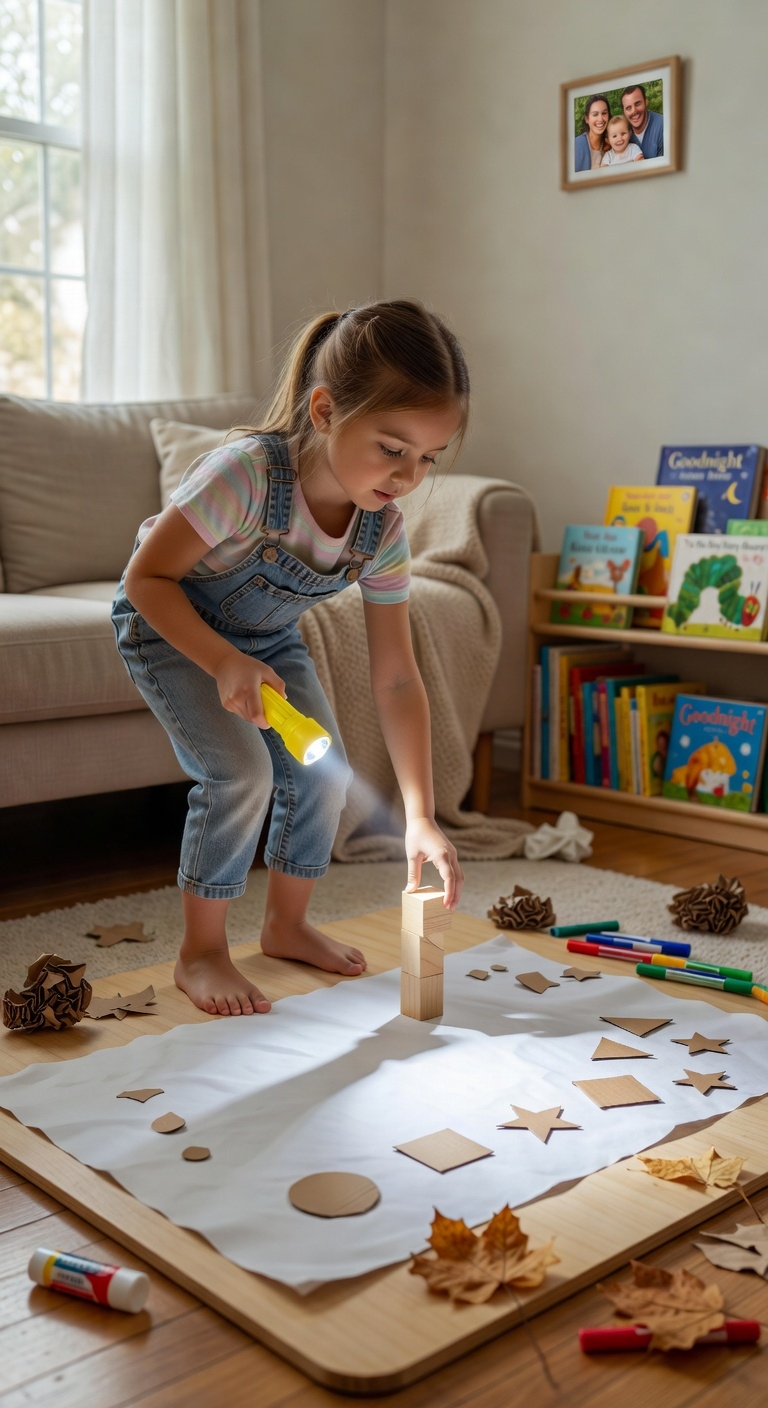
Grab a flashlight and a few sturdy cardboard cut‑outs of basic shapes, circle, square, triangle, and star, and tape them to the floor about 12 inches apart, forming a winding “crawl” path. Encourage kids to crawl, shining the light to cast shadow puppets that match each shape. Use flashlight storytelling to narrate a brave explorer’s quest, praising accurate identification and steady movement. Safe, fun, and educational!
Hidden‑Object Quest Under Throw‑Blankets For Memory Development
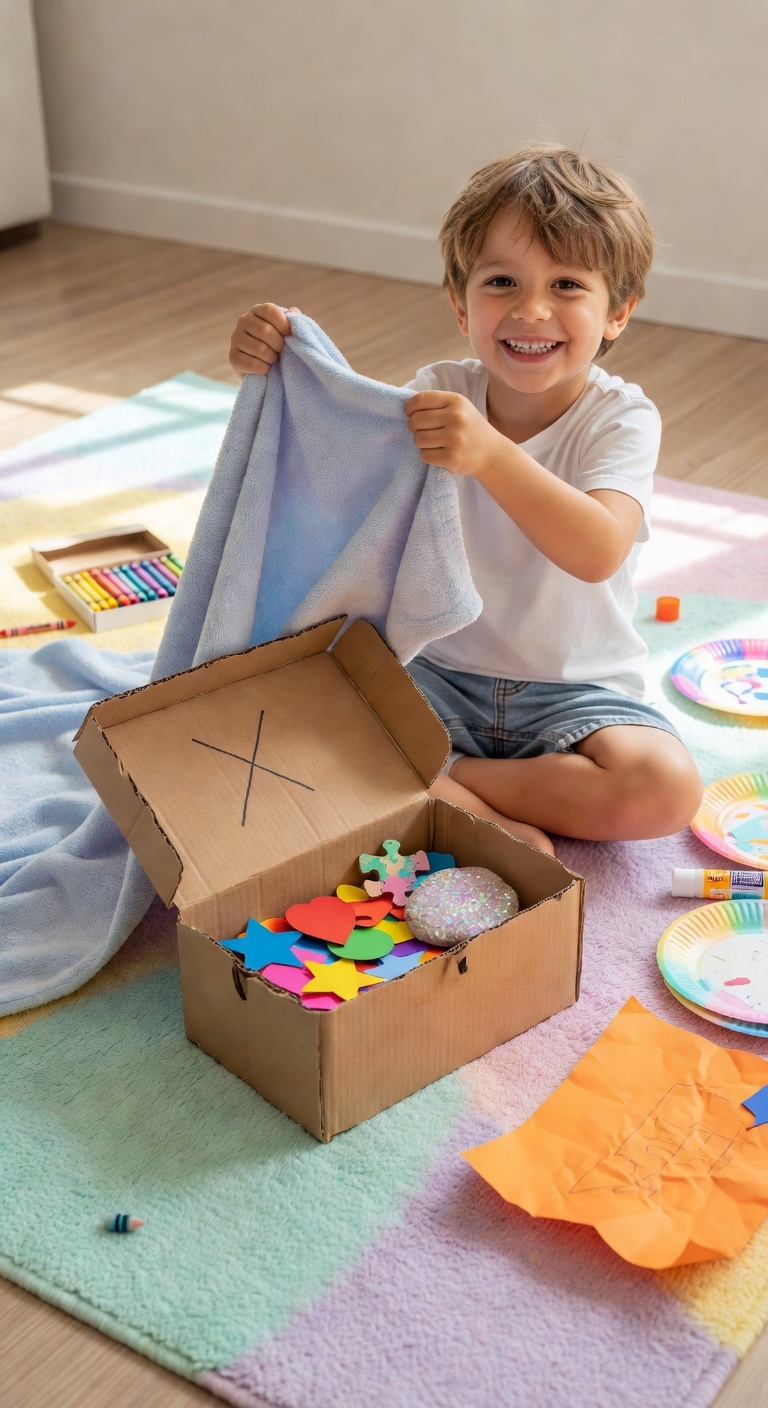
When you drape a bright, soft blanket over a pile of toys, a secret world pops up for kids to explore. Set up memory puzzles by hiding familiar objects beneath the fabric, then guide children to retrieve them using gentle cues. Emphasize safe blanket bundling, ensuring edges stay smooth and the area is clear of hazards. Celebrate each successful find with enthusiastic cheers!
Simon Says” Balance Course With Voice Commands For Listening Skills
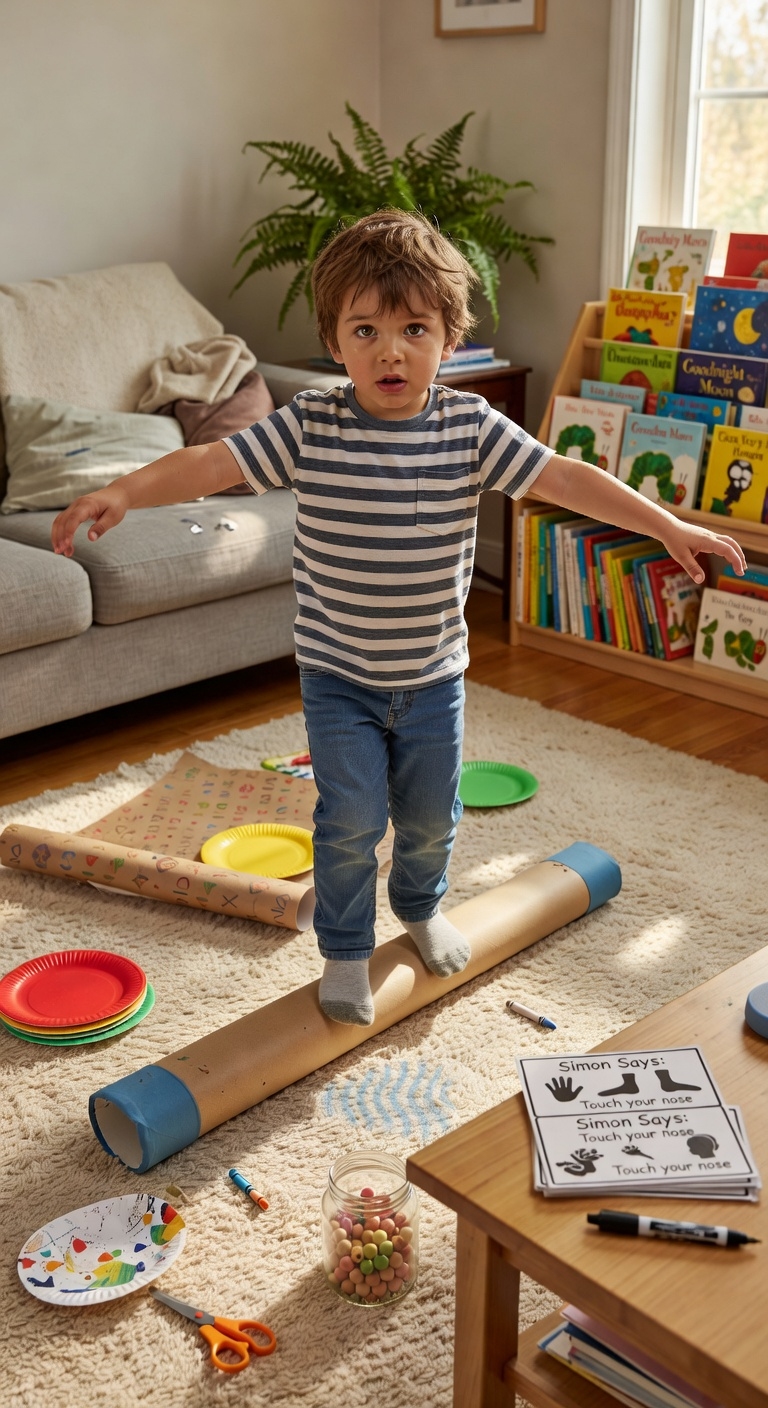
If you set the living‑room floor like a gentle river, you can turn a simple “Simon Says” game into a balance‑boosting adventure that sharpens listening skills. Place a 2‑foot tape “riverbank” line, add soft cushions, and give clear voice commands. Kids practice auditory focus, moving slowly, then quickly, fostering cooperative games. Celebrate each steady step, exclaim “Great balance!” and watch confidence rise.
Story‑Line Adventure Using Book Pages To Boost Literacy
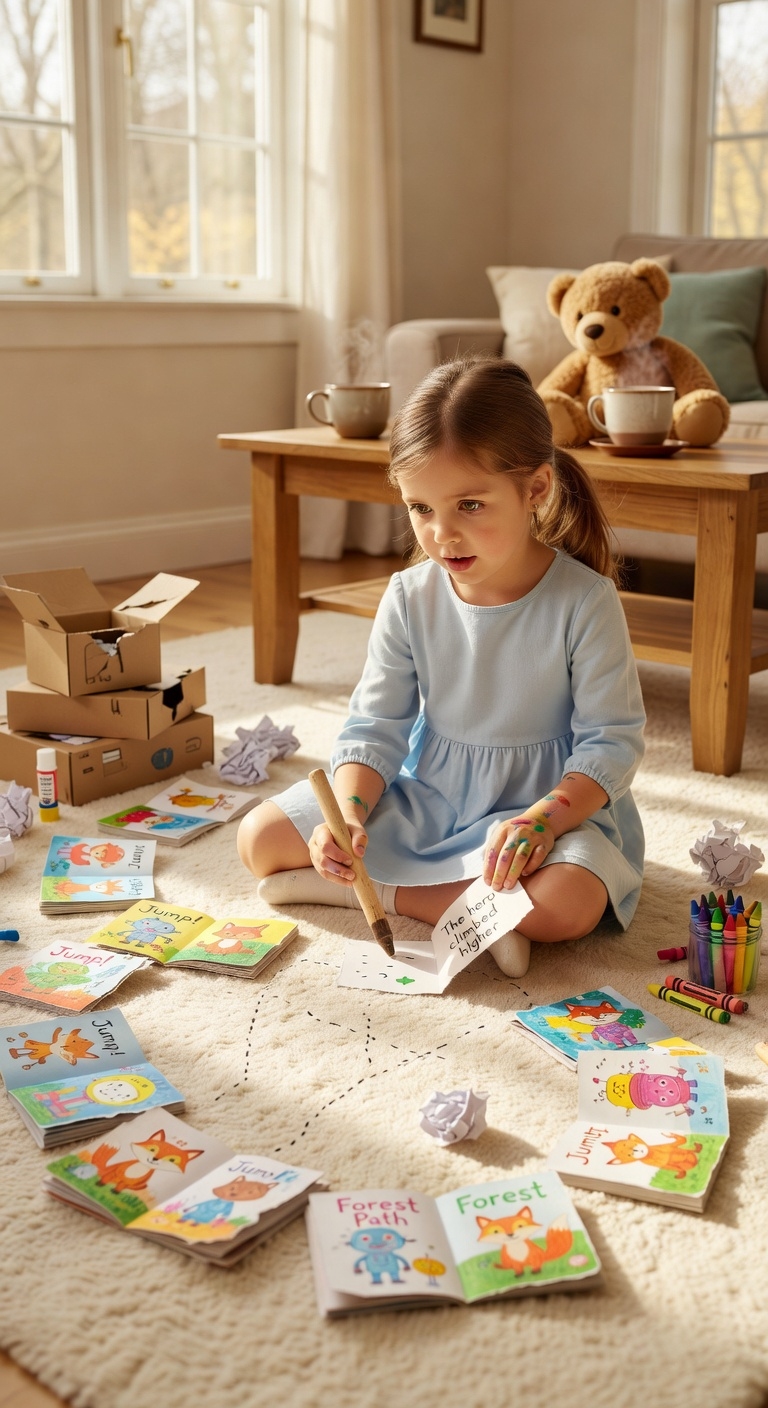
Because a story can turn a living‑room into a magical quest, you’ll guide kids through a “Story‑Line Adventure” that blends reading with movement. Lay a safe carpet, spread open storybook pages, and assign each page a simple action, hop, crawl, or balance. The storybook narrative creates a literacy boost while kids practice coordination. Celebrate each finish line with high‑fives!
Velcro‑Wall Climbing Grid For Hand‑Eye Coordination
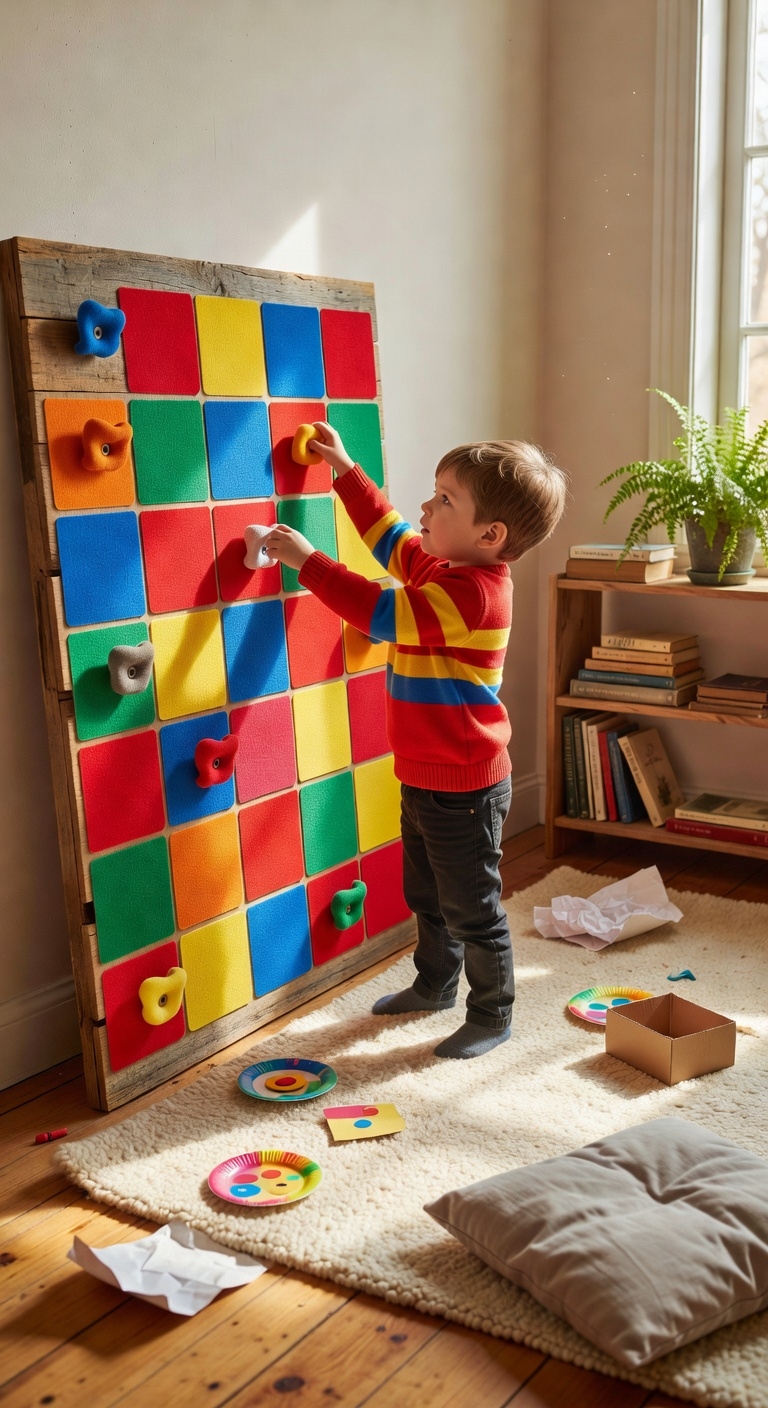
Ready to turn a blank wall into a hand‑eye‑training playground? Attach a sturdy 4‑ft × 4‑ft Velcro board, ensuring strong Velcro adhesion. Mark colorful squares 6 inches apart; kids grasp and pull Velcro‑covered shapes, boosting coordination development. Supervise, keep edges padded, and celebrate each successful climb! Follow these steps, and watch confidence soar, plus giggles when “gravity” pretends to be a friendly monster.
Eco‑Detective Trash‑Sort Sprint With Recyclable Materials
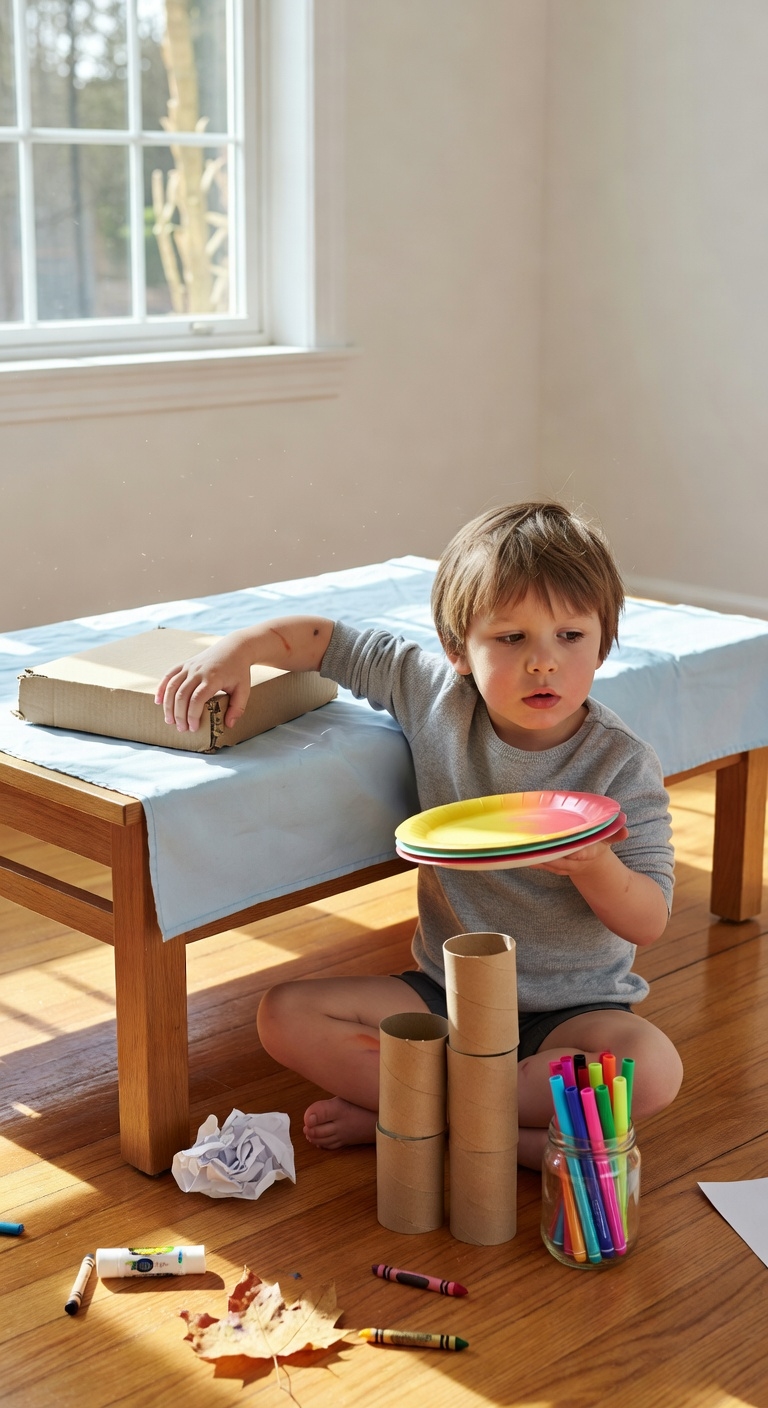
Turn the Velcro‑wall into a detective’s lab by swapping the climbing grid for a trash‑sort sprint that uses real recyclable items. Lay out three bins, paper, plastic, metal, each labeled with bright stickers. Kids dash, pick up a crumpled bottle, and place it correctly, reinforcing recycling habits. You’ll see faster sorting, brighter smiles, and a tangible environmental impact. Stay safe, supervise, and celebrate every successful find!
Clock‑Face Time‑Travel Tunnel To Teach Telling Time
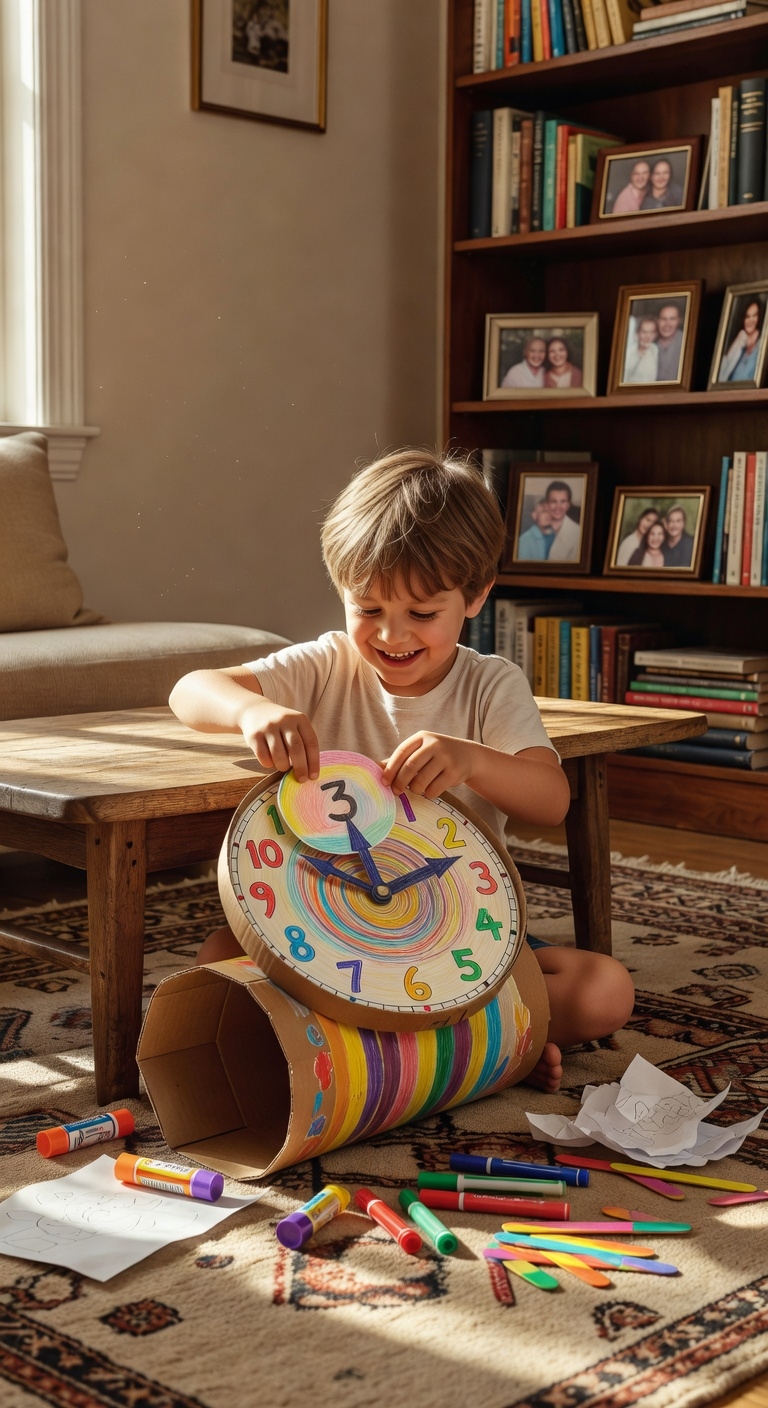
When you set up the Clock‑Face Time‑Travel Tunnel, start by laying a 6‑foot long carpeted “tunnel” on the floor and attach a large, printable clock face to each side, making sure the hour and minute hands are movable. Guide kids through Time telling crafts, letting them adjust hands to match spoken times. Use sturdy tape, keep edges smooth, and celebrate each correct answer with a grin!
Pattern‑Matching Puzzle‑Path Floor Tiles For Recognition
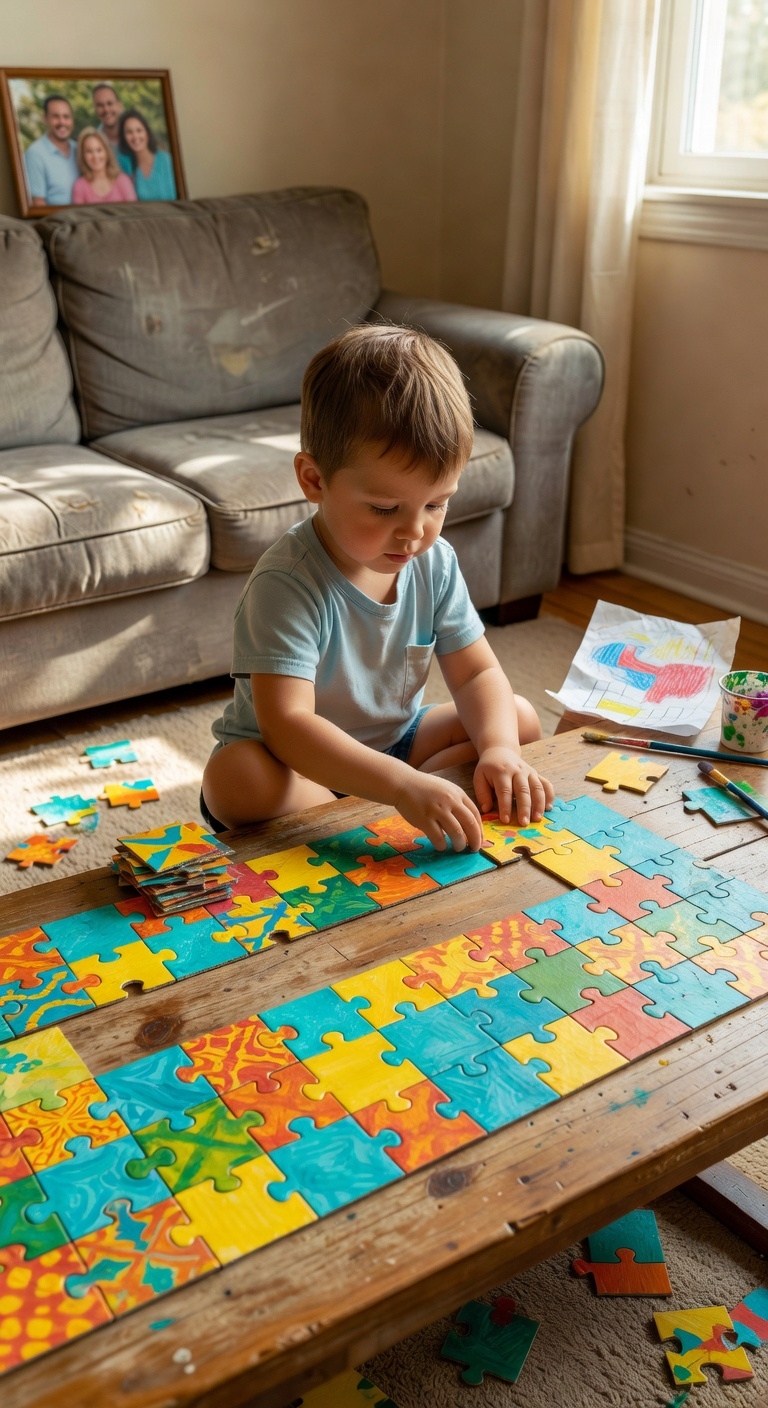
Start by laying a 4‑foot‑by‑4‑foot carpeted “puzzle‑path” on the floor, then arrange the colorful floor tiles in a winding line that looks like a treasure map. Guide kids to step on each tile, matching shapes and colors for pattern recognition. The visual puzzles keep them focused, while soft edges and non‑slip backing ensure safety. Celebrate each correct match, cheers, high‑fives, and giggles!
Weather‑Station Crawl With Fan, Mist, And Light For Science Exploration
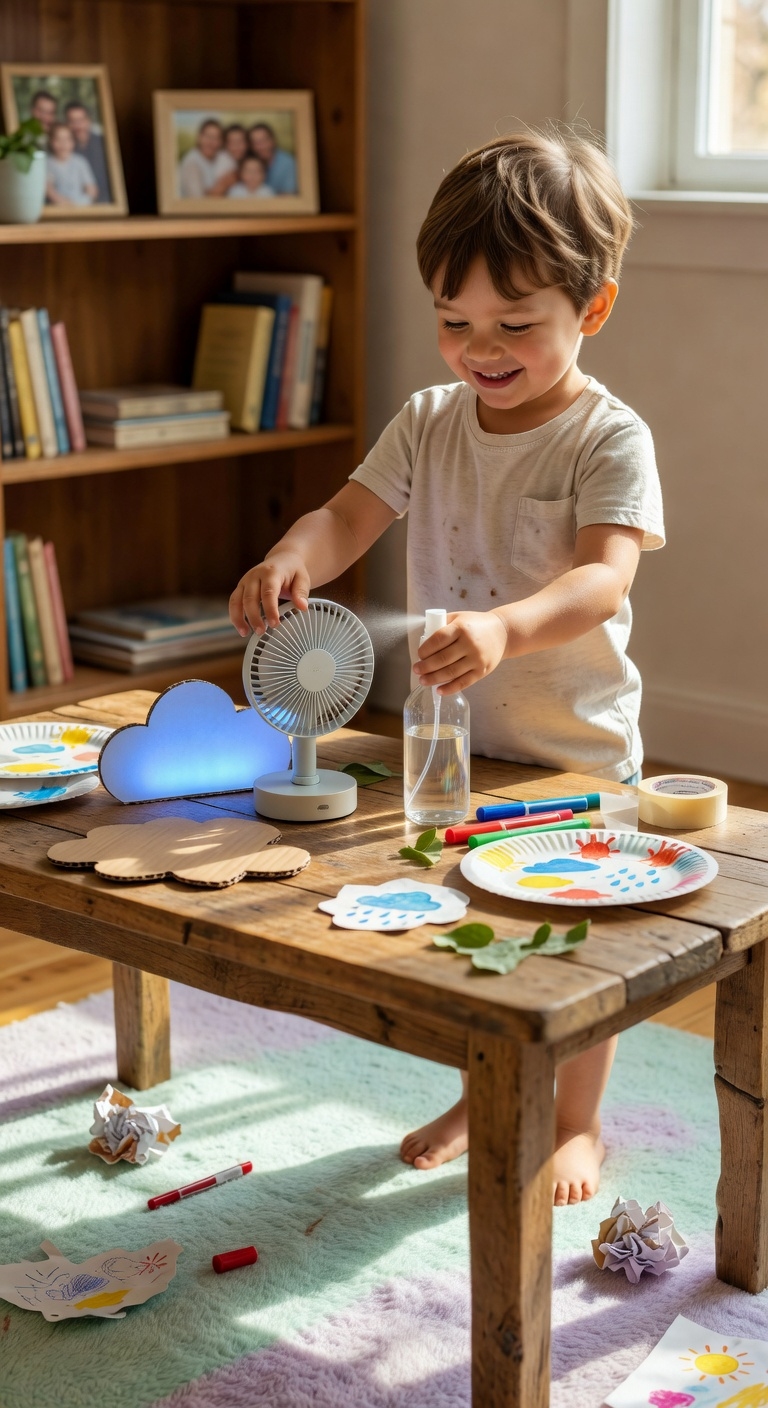
If you set up a mini weather‑station crawl, kids will feel like tiny scientists exploring a stormy adventure right in the living room. Place a safe fan at 12 inches, a mist spray no more than 2 feet high, and a soft LED light. Connect weather sensors, display climate graphs, and guide them to record wind speed, humidity, and light intensity. Celebrate each discovery!
Coding‑Step Floor Mats For Sequencing Foundations
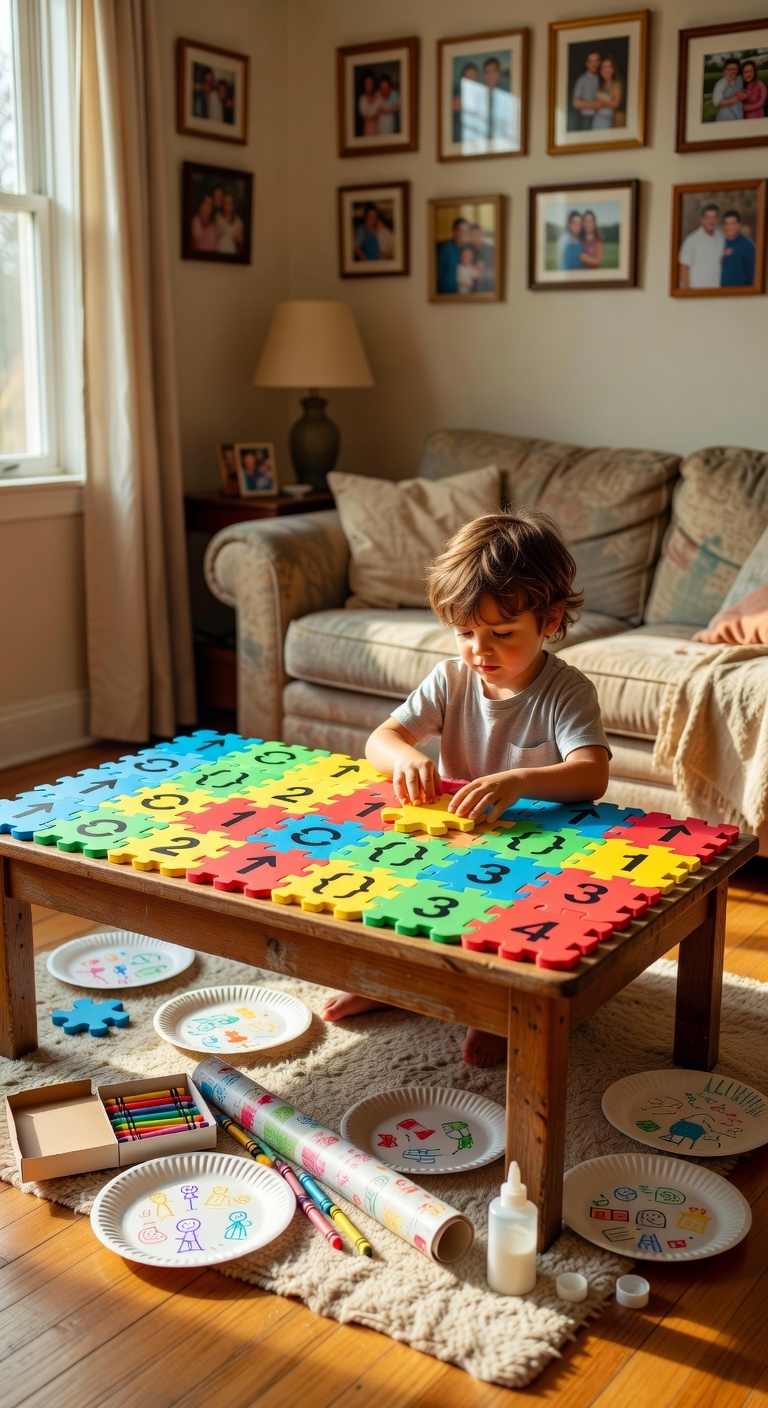
Even though the living‑room floor feels ordinary, you can transform it into a coding playground with step‑mats that teach sequencing. Lay interactive coding mats in a 2‑foot grid, secure them with non‑slip backing, and guide kids through sequencing games that mimic simple programs. Encourage them to step, pause, and repeat patterns, celebrating each correct sequence with high‑fives and cheerful cheers!
Final Takeaways
Now you’ve turned your living room into a playground where every step sparks curiosity. Picture the pillow tunnel as a fluffy river, the tape‑line beam a rainbow bridge, and the weather‑station crawl a mini‑storm, each adventure builds balance, math, and science skills. Follow the simple measurements, set up the cues, and watch confidence blossom. Celebrate every wobble, giggle, and “I did it!” as your child masters new abilities, one joyful obstacle at a time.