
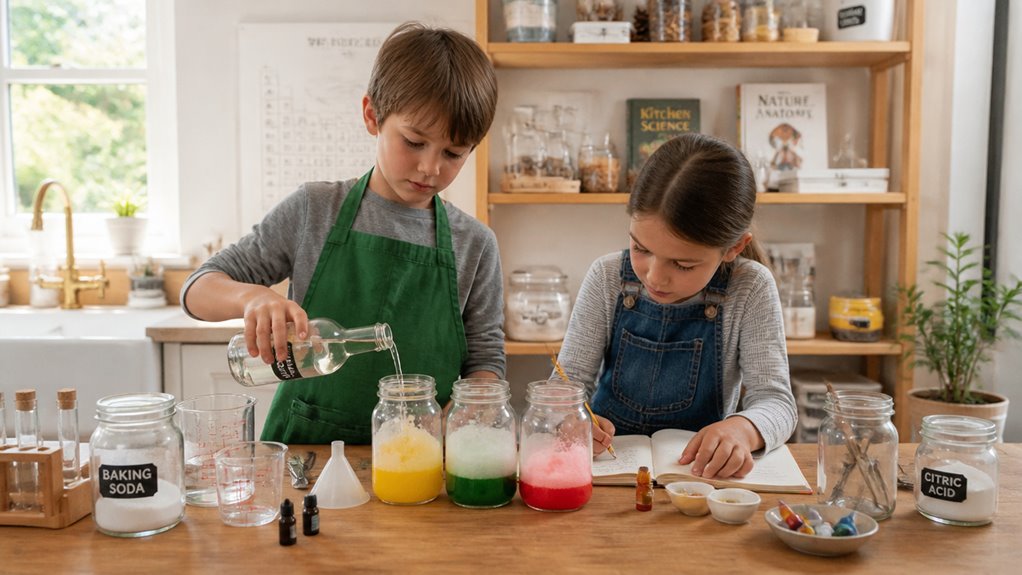
Have you ever wondered if mixing household ingredients can unlock hidden scientific secrets? It turns out, many everyday kitchen items can transform a simple day into a fascinating experiment, proof that science isn’t just in labs but right at your fingertips. Imagine creating colorful salt crystals or launching a tiny water rocket with baking soda and vinegar! Ready to see how a few common supplies can make learning fun and memorable? There’s a whole world of discovery waiting just beyond your pantry, and you’ll want to explore it all!
How to Grow Colorful Salt Crystals at Home
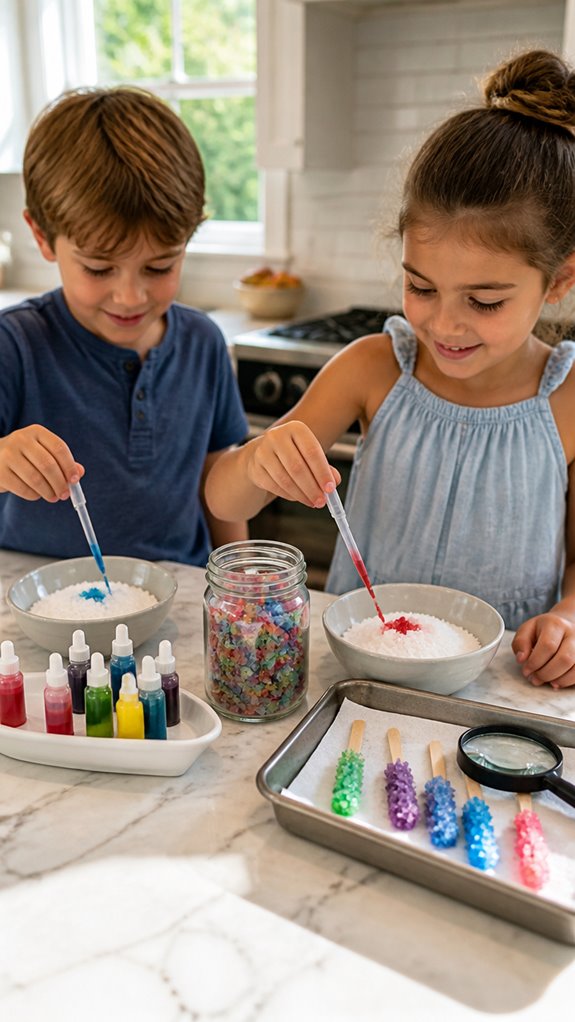
Growing colorful salt crystals at home is a fun and easy science adventure that makes you feel like a wizard creating magical gems! With simple crystal science, dissolve ¼ cup salt in ½ cup hot water, then add drops of food coloring. Pour into a clean container, wait patiently for days, and watch vibrant crystals grow, your sparkling, magical treasure! This hands-on experiment develops critical thinking skills as children observe chemical reactions and predict crystal growth patterns.
Making a Rainbow in a Glass to Learn About Light and Color
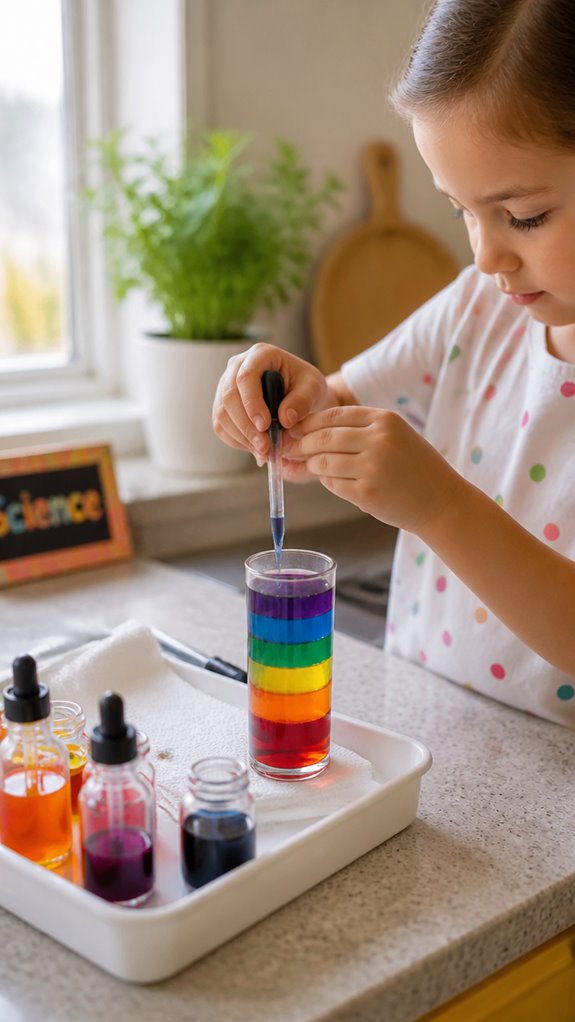
Your colorful salt crystals taught you how science can make magic happen, and now you’re ready for another fun experiment, making a rainbow in a glass! Carefully layer honey, dish soap, water with food coloring, and oil. The different densities create a stunning rainbow effect, showing how colorful science and light refraction teach us about natural rainbows and colors all around us! This hands-on creative project demonstrates how interactive experiments help children grasp fundamental concepts about light, color, and density in ways that traditional learning cannot replicate.
Build a Water Filter Using Household Materials
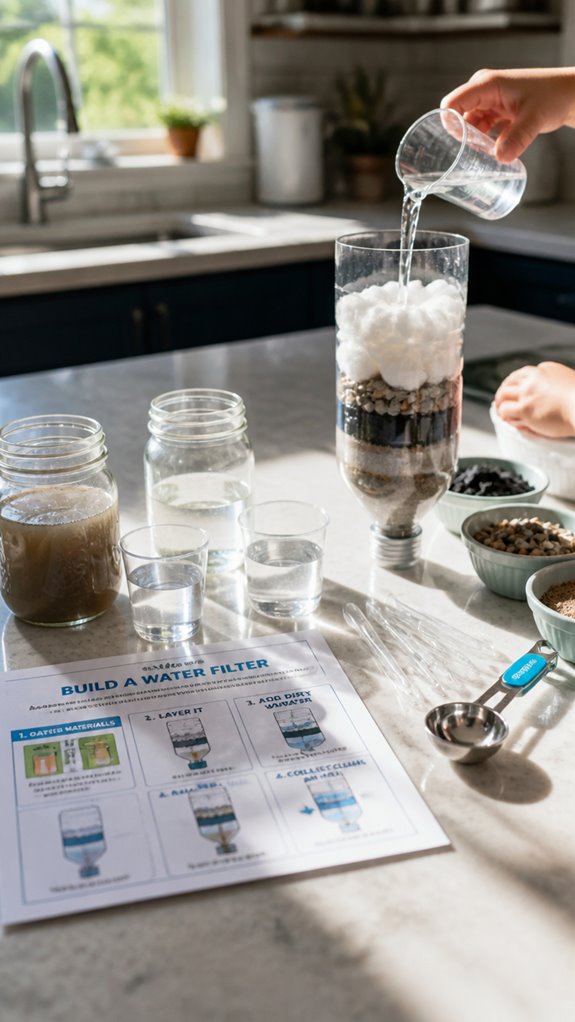
Building a simple water filter at home is a fun and exciting way to see science in action! Using household items like a plastic bottle, coffee filter, charcoal, sand, and gravel, you can create a water filtration system. Layer the materials, gravel, sand, then charcoal, and watch impurities and odors disappear! Remember, regularly clean or replace parts for the safest, clearest drinking water. This hands-on experiment teaches kids the same physical activity and learning concepts they experience during outdoor nature exploration.
How to Make a Water Rocket With Baking Soda and Vinegar
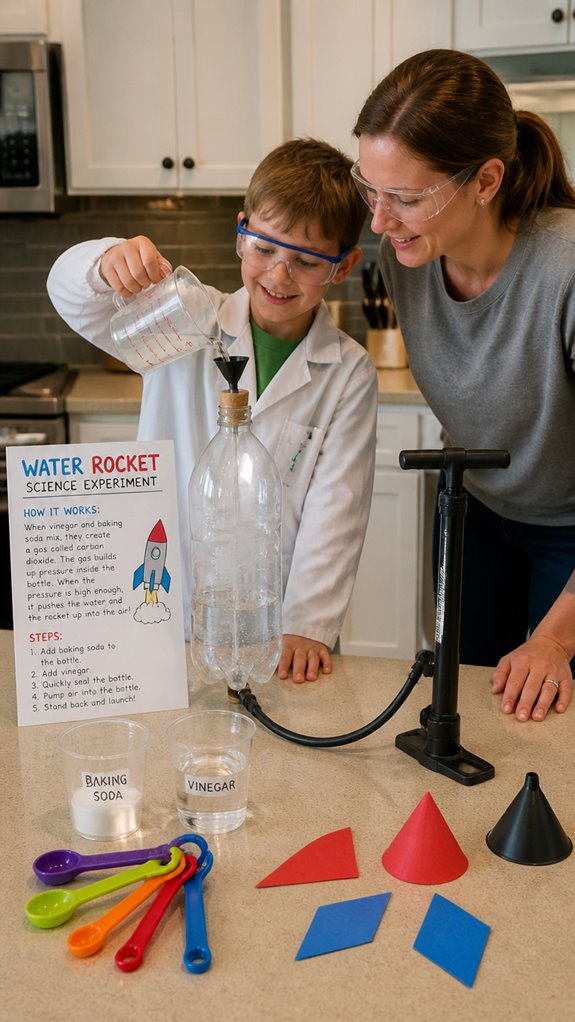
Have you ever wondered how to make a rocket blast off like a real spaceship? You’ll create a water rocket using a plastic bottle, water, baking soda, and vinegar, safety first! Fill the bottle, add a tiny spoonful of baking soda, then vinegar. Seal quickly, wait for pressure to build, then watch your water rocket launch sky-high with a fizzy pop! This exciting experiment pairs perfectly with indoor camping activities to keep kids entertained on rainy days or during indoor playtime.
How Does Surface Tension Work? Experiment With Pepper and Dish Soap
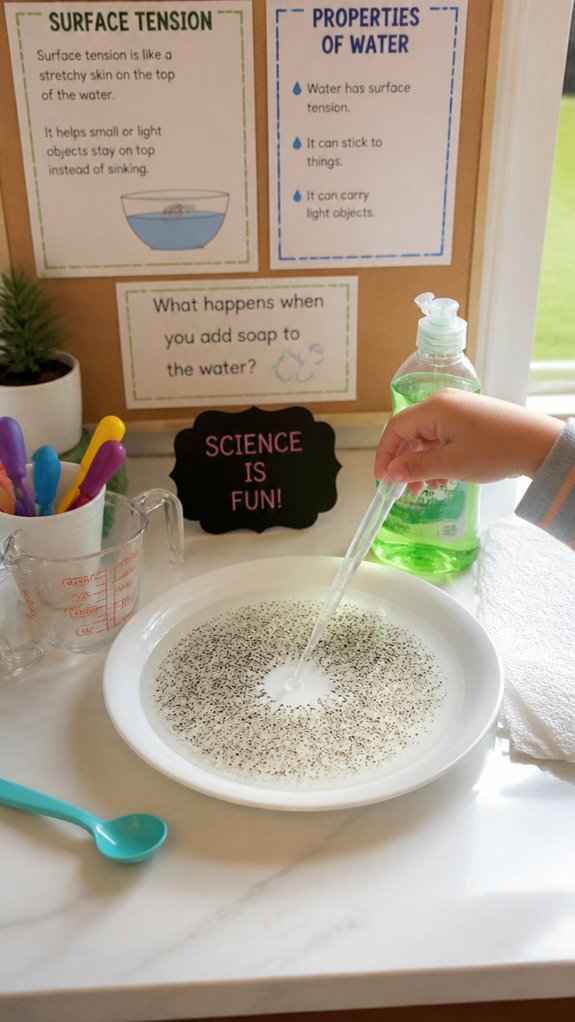
Ever wondered why a tiny sprinkle of pepper can seem to dance across the water’s surface? That’s surface tension at work! Carefully sprinkle pepper on water in a shallow dish, then gently add a drop of dish soap. Watch how the pepper quickly moves away, showing how soap breaks the surface tension, revealing the invisible “skin” holding the water molecules together. For a similar hands-on experience, you can explore creative activities for kids that use everyday materials to demonstrate scientific principles in engaging ways.
Create a Lava Lamp Effect With Oil, Water, and Alka-Seltzer
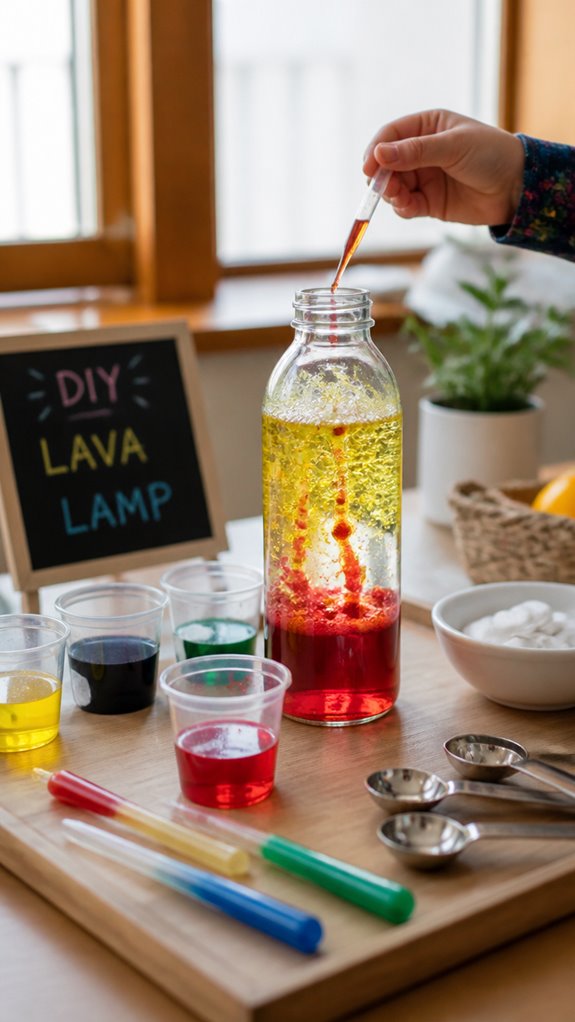
Now that you’ve seen how soap makes pepper jump and dance, let’s create a magical lava lamp in your cup! Fill a clear container with water and add a few drops of food coloring. Pour in oil up to three-quarters full. Drop in Alka-Seltzer, and watch colorful bubbles rise, burst, and fall, just like a real lava lamp!
Explore Emulsions Using Milk and Food Coloring
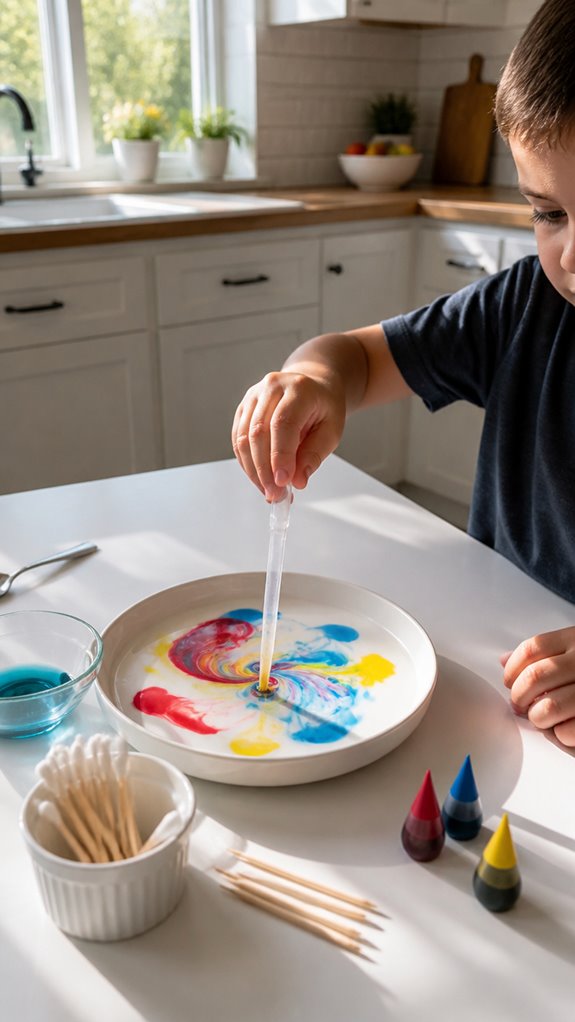
Did you know that milk can become a swirling canvas of colors when you add a little food coloring? Watch how the fats and liquids create tiny surface tensions, trapping the dye. When you gently add soap, it breaks up these fats, releasing the colors into lively, dynamic emulsions. Experiment safely and see the magic of science happening right before your eyes!
How to Make Raisins Dance Using Gas Bubbles
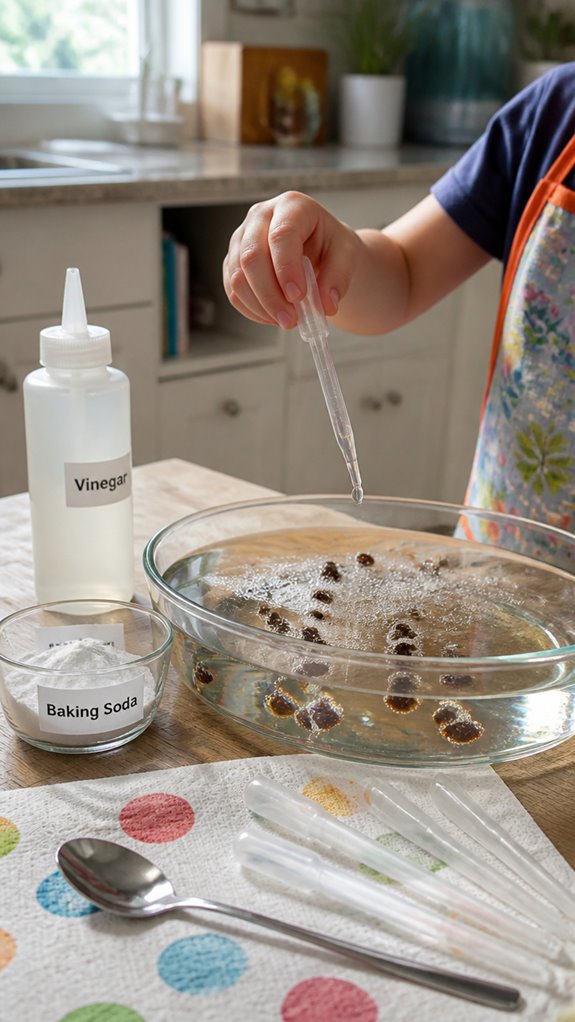
Get ready to watch raisins perform a bubbly dance right in your glass! Fill a clear cup with carbonated water, about three-quarters full. Drop in a few raisins gently. Watch as bubbles cling to their rough surface, making the raisins rise and fall like tiny dancers. It’s a safe, fascinating way to see gas bubbles and buoyancy in action!
Grow Beans in Clear Containers to Watch Roots and Shoots Develop
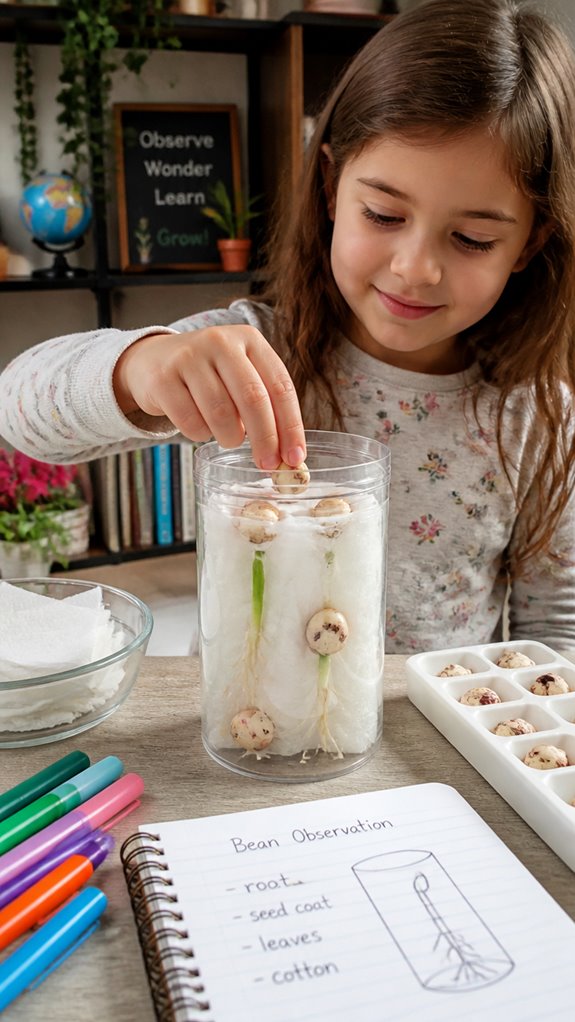
Watching tiny bean seeds come to life is a fantastic science adventure you can do right at home! Place beans in clear containers with moist paper towels or soil, then put them in indirect sunlight. Daily checks reveal root growth growing downward and shoots sprouting upward, all signs of healthy growth. Celebrate these tiny miracles as they develop!
How to Build and Launch a Simple Bottle Rocket
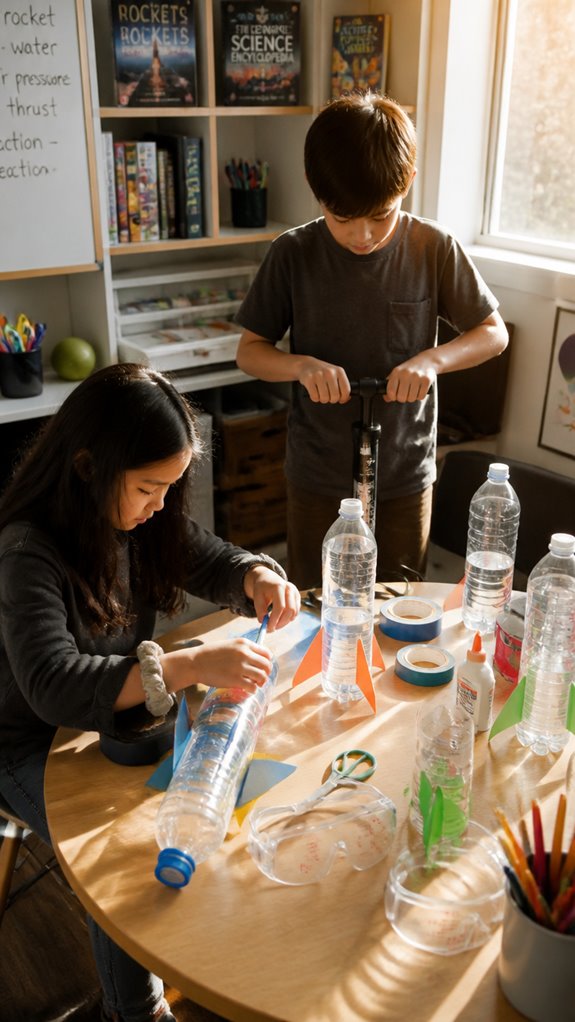
Building your own bottle rocket is a fun and exciting science project that makes you feel like a real engineer! Fill a plastic bottle one-third full of water, add a pinch of baking soda, then pour vinegar in. Fit the cork snugly and step back. When the gas builds up, the rocket blasts off! Always wear goggles and launch outdoors safely.
How to Use Water Displacement to Measure Density
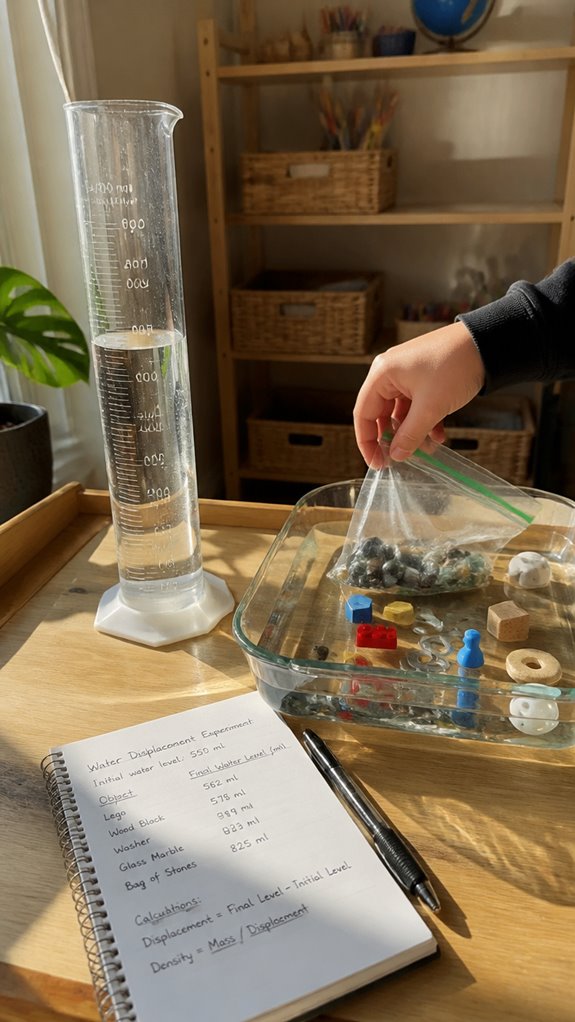
Have you ever wondered how to find out how much stuff is packed inside an object? Water displacement helps you do this safely! Submerge your object in a large container without spilling. Measure the water before and after. The difference is the volume. Divide the object’s weight by this number, and voilà, you’ve found its density! Fun science at your fingertips!
How Solubility Changes With Hot and Cold Water: Dissolving Sugar
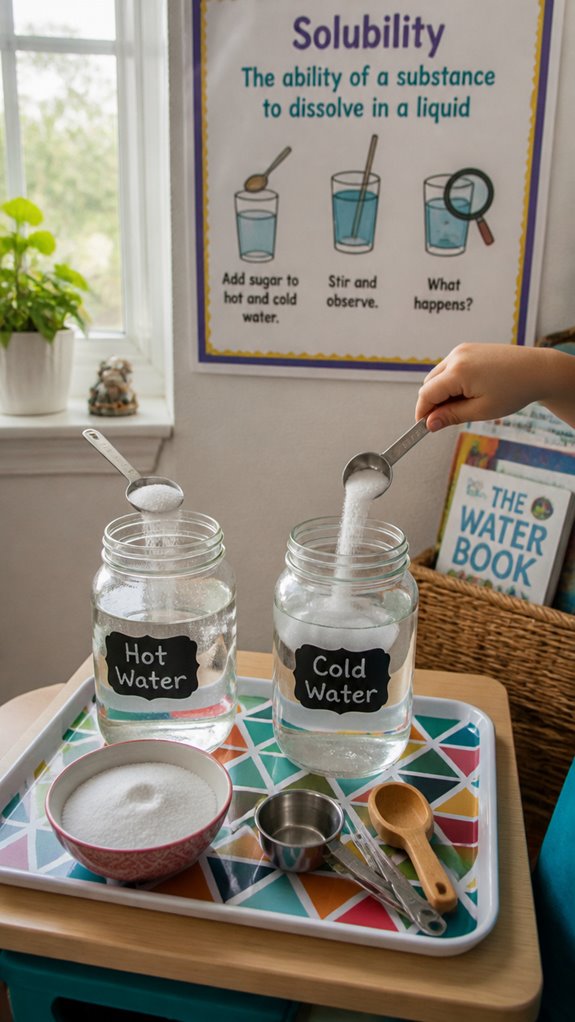
When you mix sugar with water, the temperature makes a big difference! Hot water helps the sugar dissolve quickly because molecules move faster, breaking down crystals easily. Cold water dissolves sugar more slowly and may need a little stirring. Remember, hot water can hold more sugar before it saturates. Be safe, have fun, and enjoy your tasty science!
Make a pH Indicator With Red Cabbage to Test Household Liquids
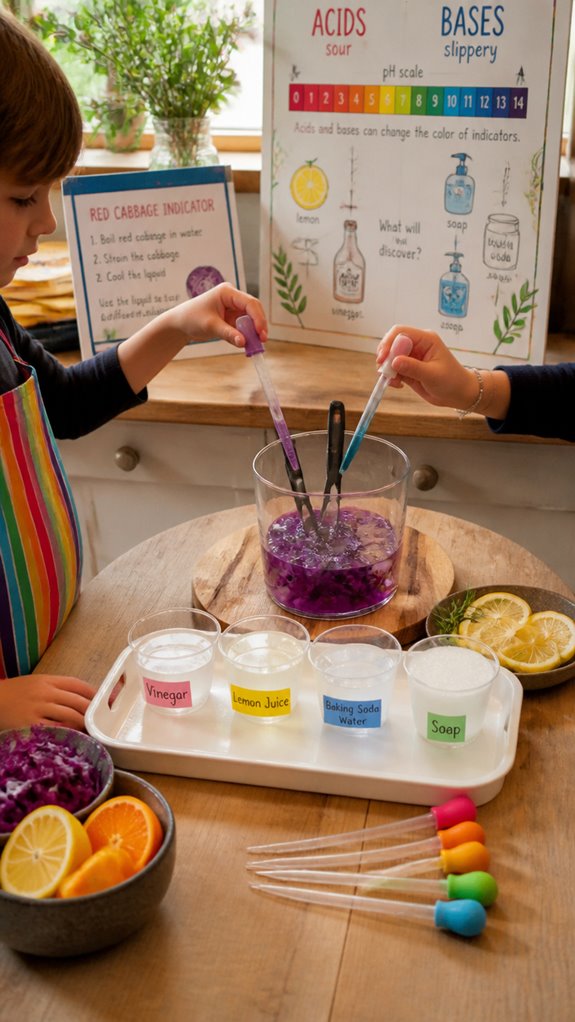
Get ready to become a tiny scientist by making your own pH indicator using vibrant red cabbage! Boil chopped cabbage, then strain the purple liquid into a container. This natural pH indicator changes color depending on the liquid’s acidity or alkalinity. Test household items like vinegar or soap to see their pH, turning your kitchen into a colorful lab!
Build a Paper Bridge and Test Its Strength
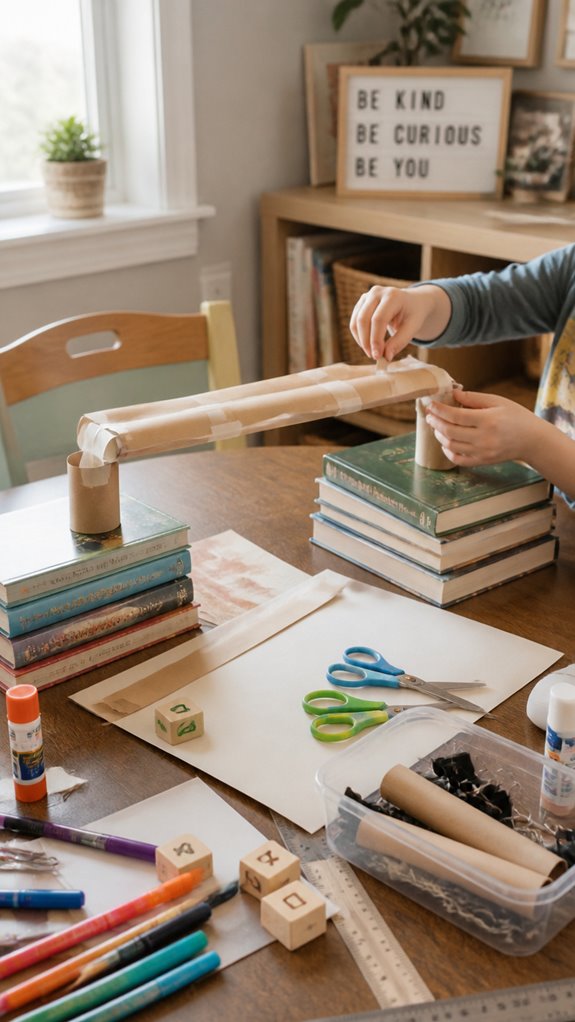
Building a paper bridge is like creating a mini engineering masterpiece right on your table! This STEM activity involves folding, stacking, or linking paper to make a sturdy structure. Carefully test its strength by adding small weights, such as coins. Try different designs like arches or trusses, and see which one supports the most weight , your engineering skills are shining!
How to Make Slime and Explore Polymers at Home
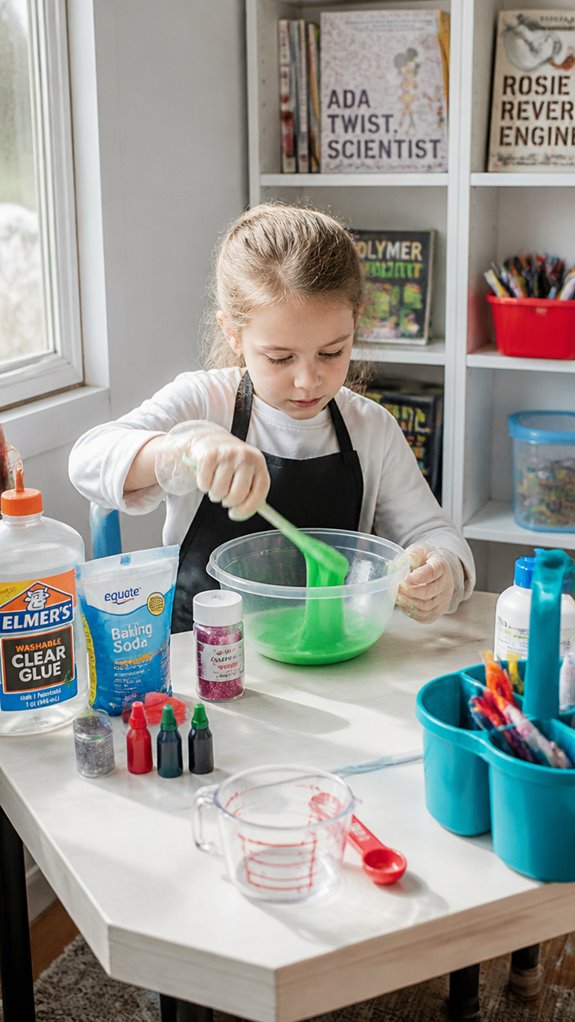
Making slime at home is a fun science adventure where you become a tiny chemist! First, mix glue with a borax or contact lens solution, watch the polymer chains entangle and turn stretchy. Add food coloring or glitter to customize your slime’s look. Remember to wash your hands afterward and always ask an adult for safety help!
Demonstrate Osmosis Using an Egg in Salt Water
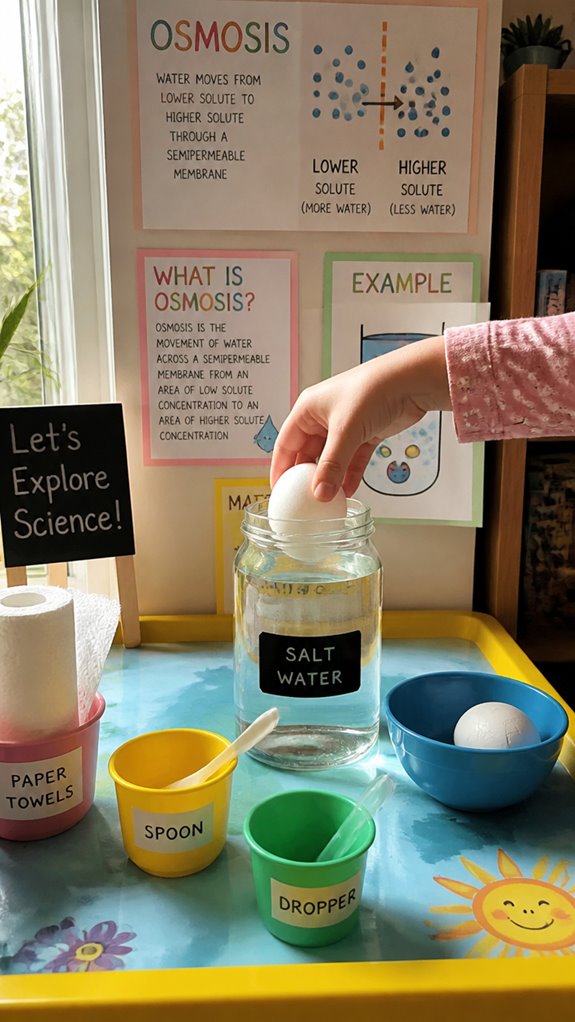
Imagine you’re about to mimic a tiny water highway through your egg! Submerge a shell-less egg in salt water, where osmosis happens, water moves out through the egg’s membrane because of the salt’s higher concentration outside. Watch as the egg shrinks and deflates, proving how water travels from low to high solute areas. Amazing science!
Create a Homemade Compass With a Magnetized Needle
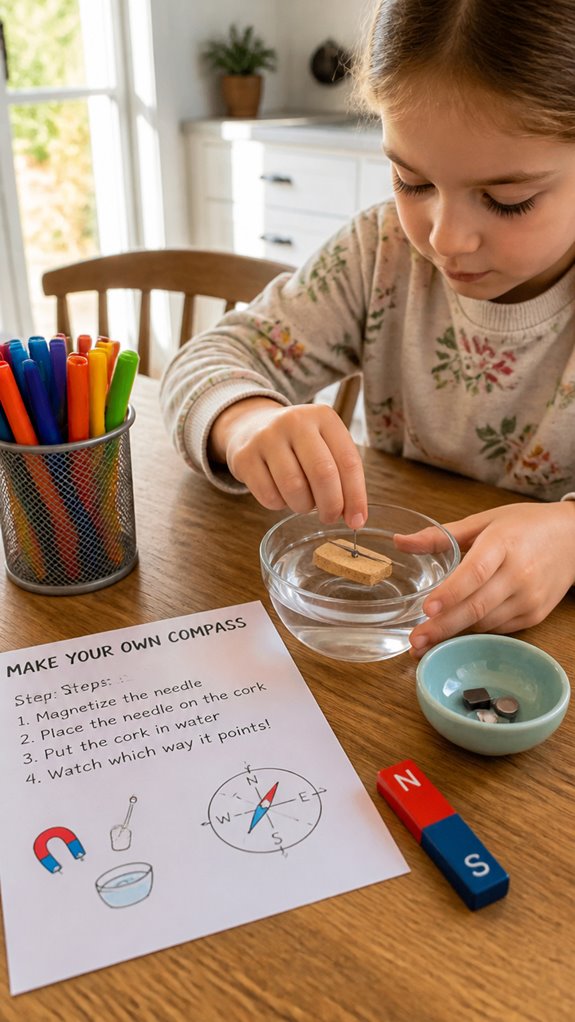
Have you ever wondered how explorers find their way without a GPS? You can create a simple compass by magnetizing a sewing needle, rubbing it with a strong magnet for about 30 seconds. Float the magnetized needle on water with a small cork. It’ll point toward magnetic north, turning your backyard into an adventure zone!
Grow Salt Crystals for Crystallization Science
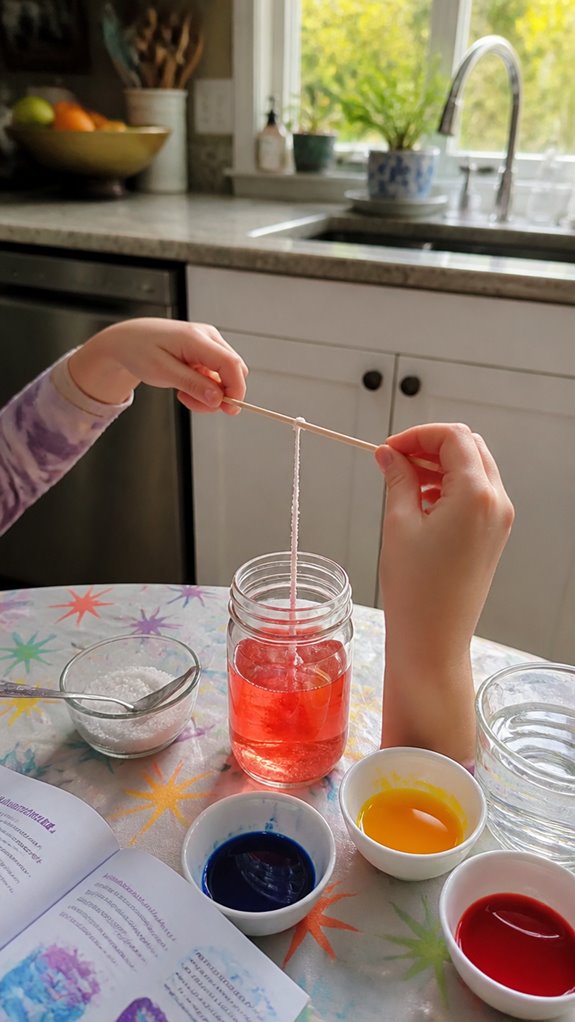
Growing salt crystals is an exciting kitchen experiment that lets you see science in action! Dissolve about ½ cup of salt in 1 cup of hot water until no more salt dissolves, your saturated solution. After cooling, place a string or stick in the mixture. Watch as tiny salt crystals form, demonstrating crystal formation and the magic of crystallization!
Observe Mold Growth to Understand Fruit Decay
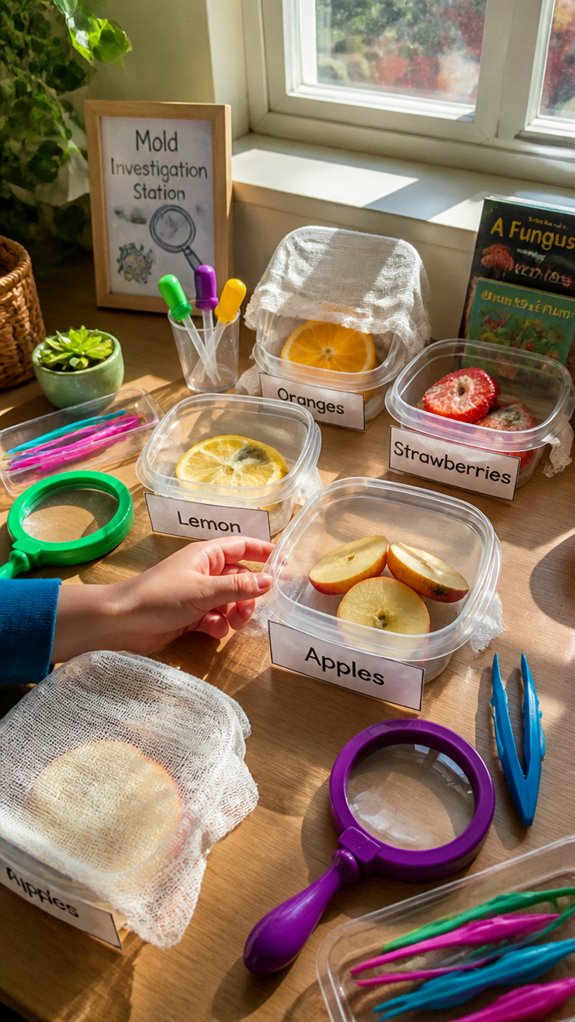
Have you ever wondered what causes fruit to turn fuzzy or slimy over time? Mold growth happens when spores land on fruit and feast on sugars and nutrients, turning it fuzzy or slimy. Warm, humid environments speed up this process, showing colorful mold patches in just a day or two. Observing mold helps you understand how food breaks down safely!
Conduct an Egg Drop to Learn About Impact Forces and Safety
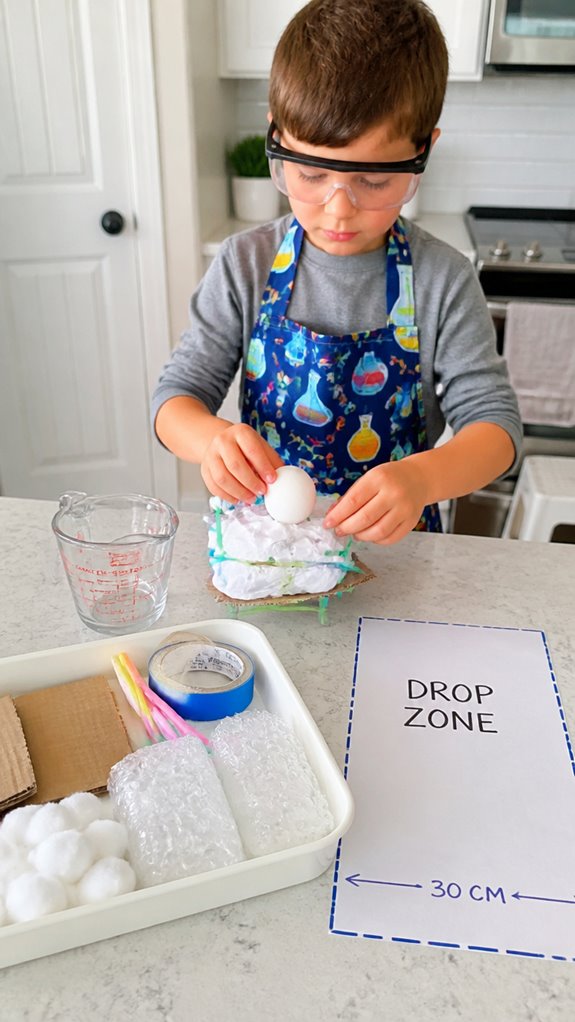
Getting ready for your exciting egg drop challenge is easy and fun! Carefully protect your eggs with cotton, foam, or bubble wrap to learn about impact forces and safety. Gently handle the eggs and drop them onto soft surfaces or inside protective containers. Measure the height until the egg breaks to see how protection keeps it safe. Celebrate your science experiment success!
Make a Firework in a Glass to Visualize Density and Immiscibility
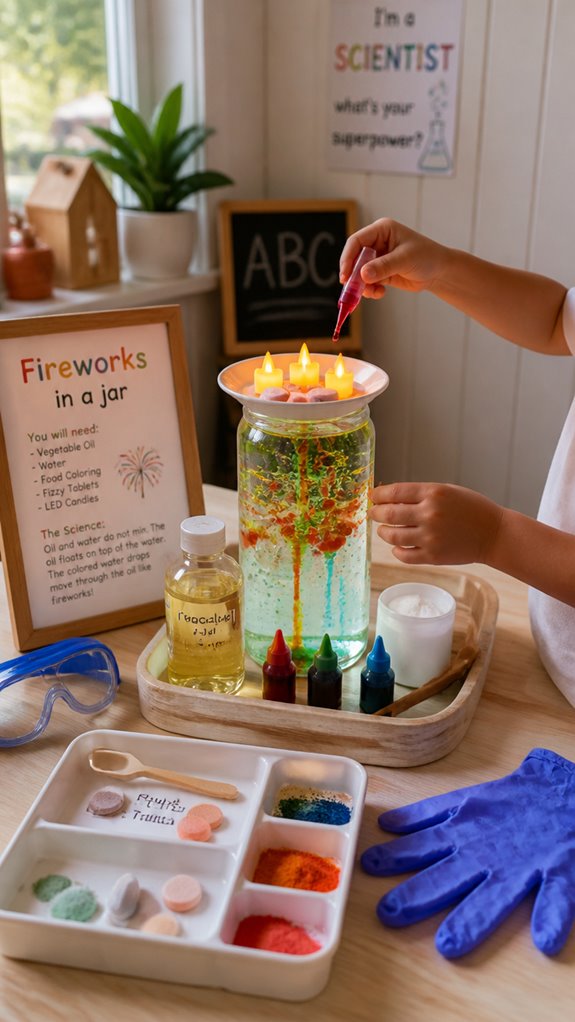
Imagine creating your own colorful fireworks right in a glass! To make a firework in a glass, pour water dyed with food coloring and oil into a clear glass. Watch as the colored water sinks and floats, creating a beautiful explosion. This simple experiment shows how liquids with different densities stay apart and makes learning fun and safe!
Discover How Fruits Rots: Mold and Decomposition
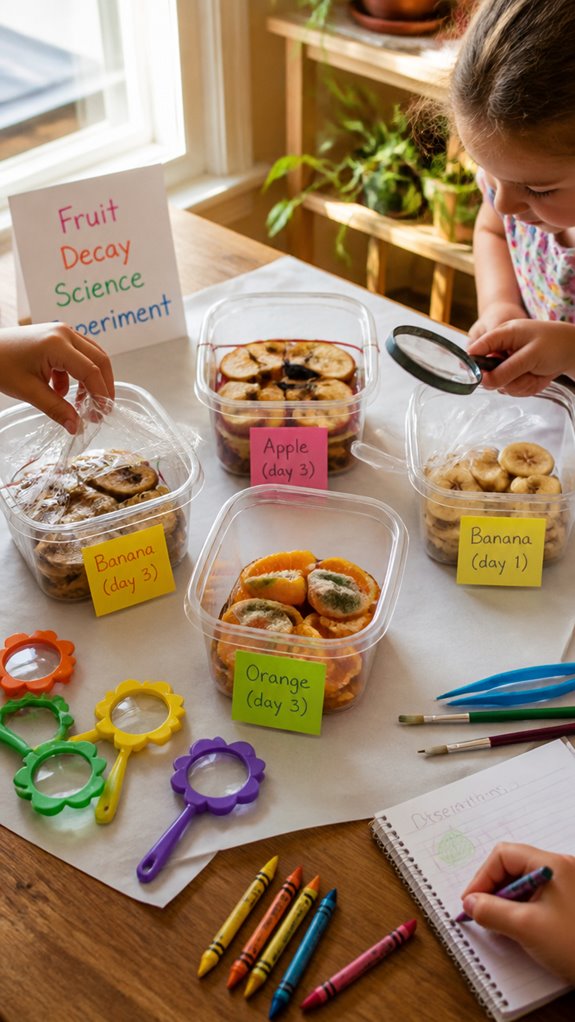
Fruits that start to rot can turn into tiny cities for mold and bacteria to thrive and do their decomposing work. Watch for fuzzy green, white, or black spots, that’s mold growth! As the fruit breaks down, gases and odors are released. Warm, moist air speeds up mold so your rotting fruit is like a busy microbial city!
How to Make a Simple Water Filter at Home
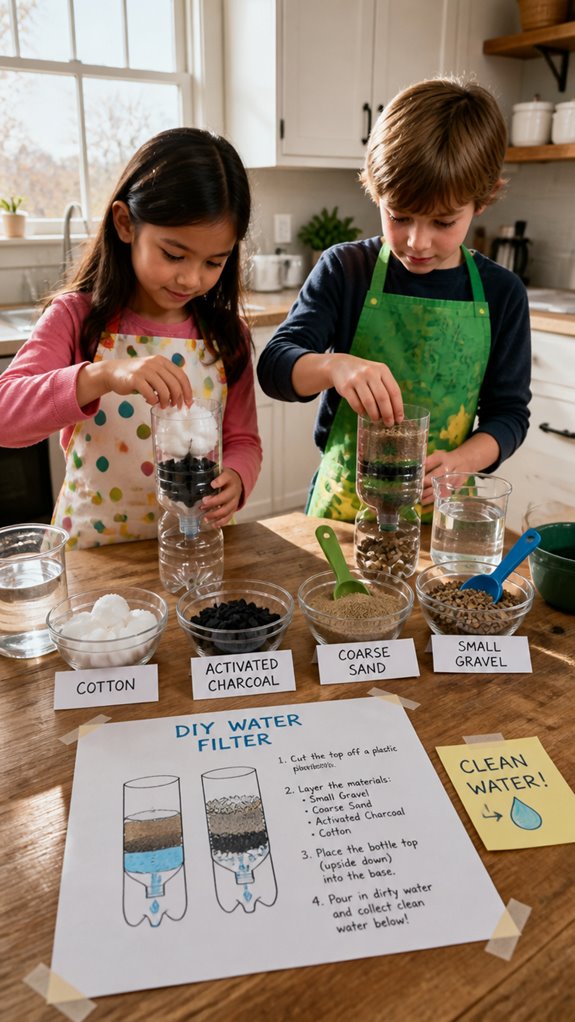
Creating a simple water filter at home is a fun and educational project that shows you how clean water can come from dirty water! You’ll layer gravel, sand, and activated charcoal in a plastic bottle, pouring dirty water slowly through. Rinse and replace materials often. Your water filter demonstrates how physical trapping and chemical adsorption make water safe and clear!
Final Takeaways
Now you’re ready to unlock your inner scientist and turn everyday ingredients into extraordinary discoveries! Think of yourself as a brave explorer like Indiana Jones, bravely uncovering mystery in your kitchen. Follow each step carefully, and watch magic happen, colorful crystals, mini explosions, or even a rainbow in a glass! Keep experimenting, stay curious, and remember: every great scientist started with a simple idea. Have fun exploring and making your world more wondrous!