
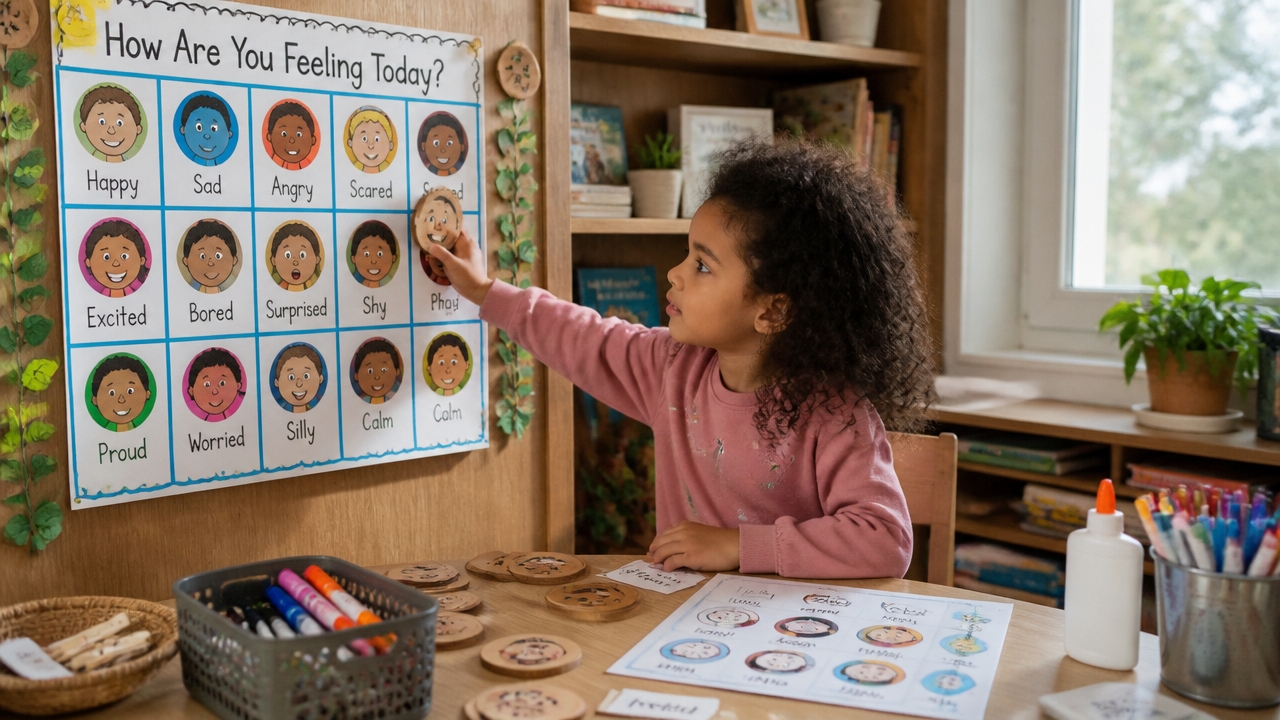
Laughter and bonds make parenting unforgettable, especially when teaching kids about feelings. You can try simple, budget-friendly activities that work, like using stickers during daily check-ins, drawing personalized emotion stories, or role-playing with puppets.
These easy ideas help your family connect and make learning about emotions less chaotic. Whether you improvise with printable charts or create your own, each activity offers a fun way to strengthen understanding.
These engaging activities are suitable for a range of ages, from preschoolers to early grade school children, and require minimal materials, making them perfect for busy families or classroom settings. They promote creativity, emotional awareness, and communication skills while fostering family bonding and self-expression.
Keep these ideas in mind, but remember there’s more to explore that will keep you and your little ones engaged and inspired in teaching feelings effectively and enjoyably.
Why Feelings Charts Help Kids Recognize and Name Emotions
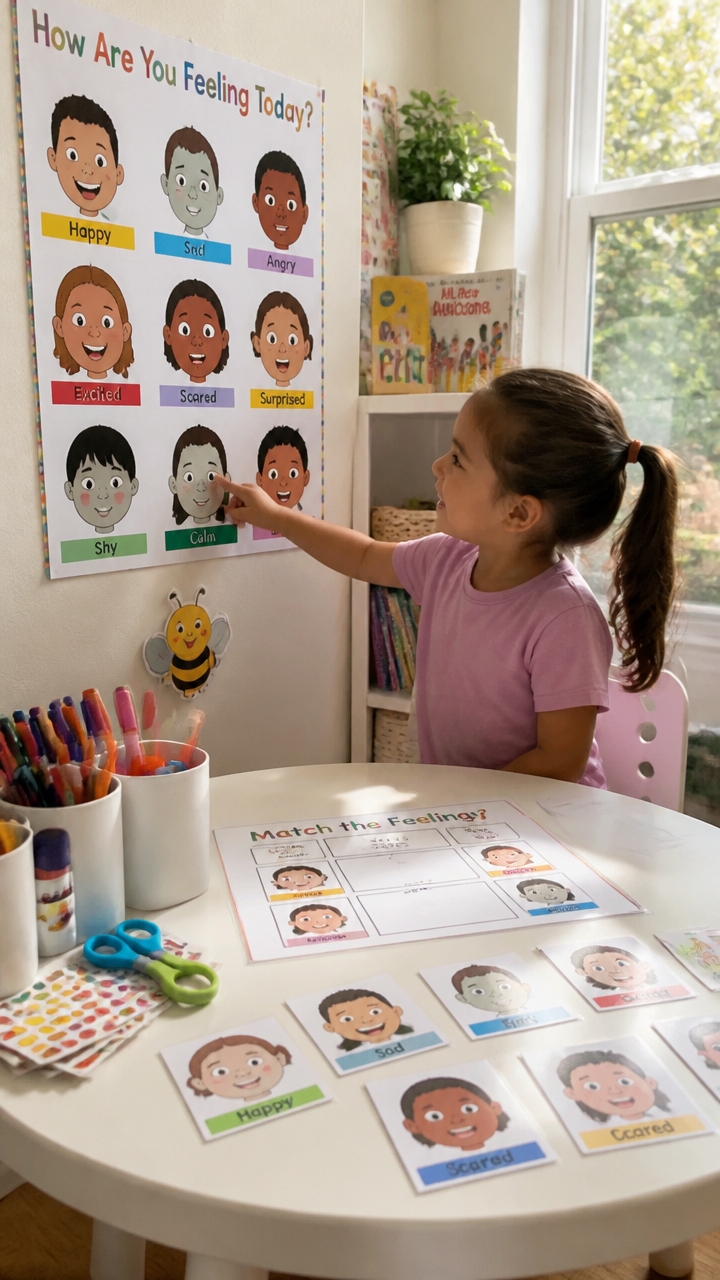
Feeling feelings is a funny, sometimes confusing part of life, and your kids can benefit from understanding those feelings. Using a feelings chart for kids helps them recognize and name emotions, building emotional vocabulary. You can create simple charts with smiley faces or words, encouraging kids to label feelings. It’s a safe way to normalize emotions and strengthen family bonds. Incorporating engaging mindfulness activities can further support children in processing their emotions effectively.
How to Choose the Right Feelings Chart for Different Age Groups
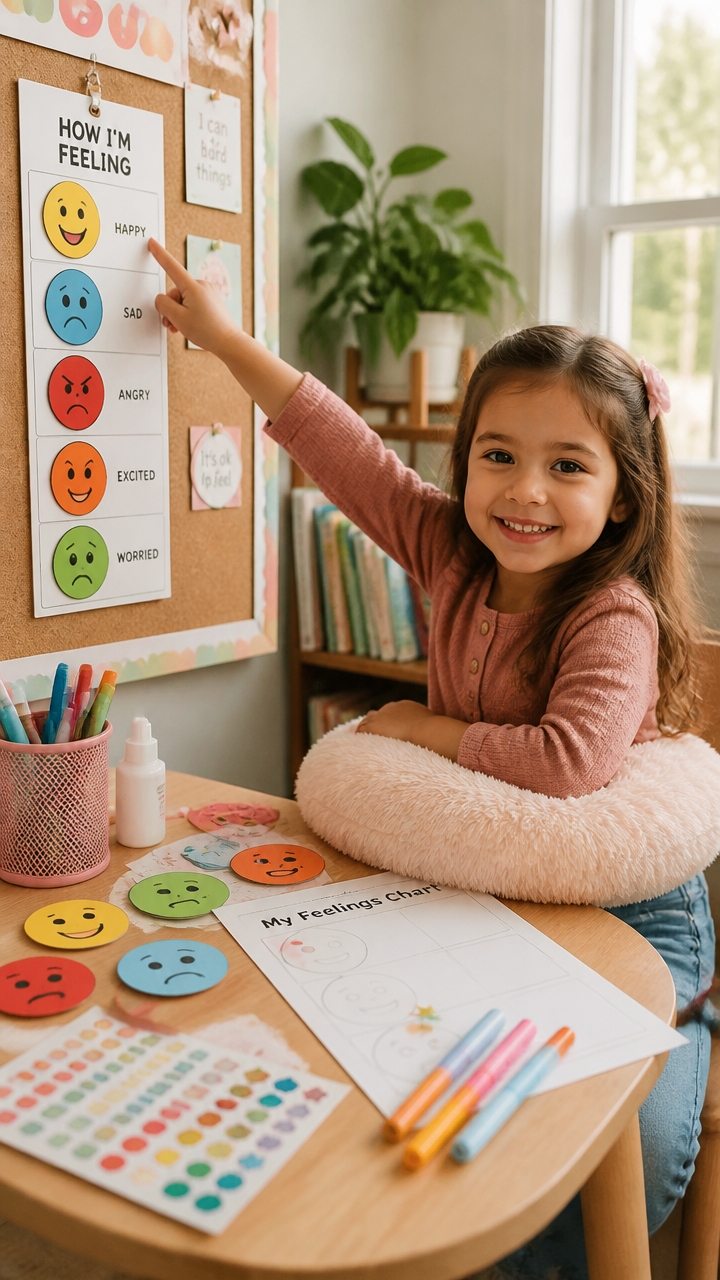
Laughter, bonds, and unforgettable moments happen when you choose the right feelings chart for your child’s age. Help children develop emotional intelligence with simple visuals for younger kids using animals or emojis. For older children, try feelings wheels or photo charts. It’s a safe way to support growth, understanding, and connection in your family. Incorporating creative kindness challenges can make these activities even more engaging and meaningful.
Making Feelings Charts Part of Daily Classroom Routines
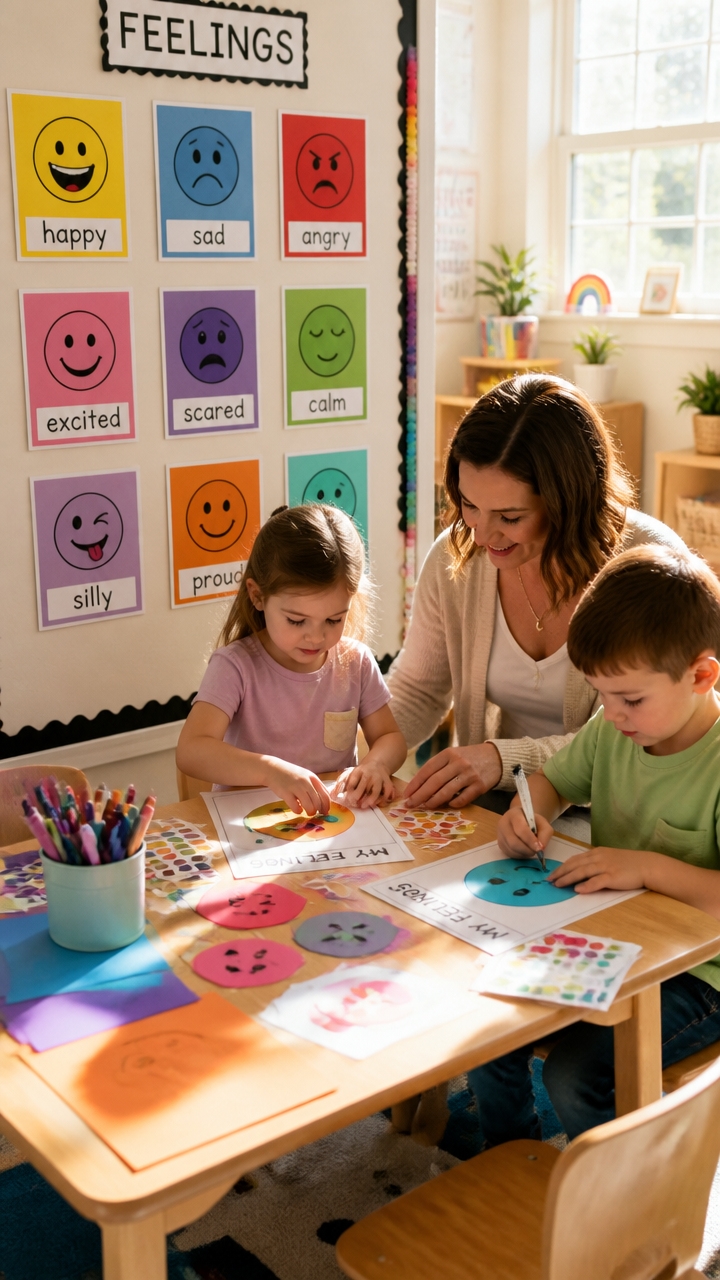
Making feelings charts part of your daily routines creates a warm, consistent environment where emotions are valued. Use a feelings or emotions chart during morning check-ins, encouraging kids to share how they feel. Incorporate unplanned moments to revisit the chart, helping children connect feelings with actions. It’s a gentle way to build emotional awareness, respect, and bonds in the classroom. Incorporating breathing exercises for preschoolers can make these activities even more engaging and help children manage their emotions effectively.
Creative Ways to Make Feelings Charts Fun and Kid-Friendly
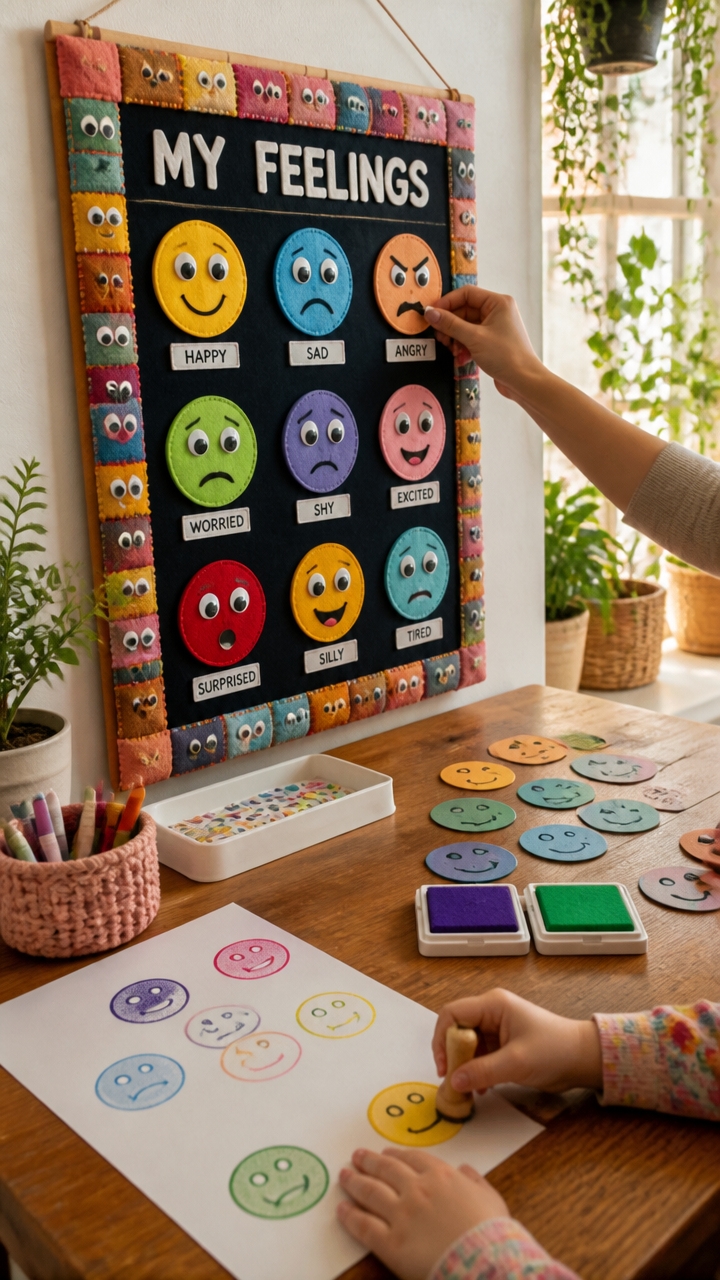
Laughter and bonds grow stronger when you find fun, creative ways to make feelings charts kid-friendly. For a feelings check-in, help kids draw or pick images, using animals or familiar characters for relatable emotions. Incorporate stickers or movable pieces to make the process interactive and engaging. It’s a playful way to help kids express and understand their feelings safely and happily.
Using Feelings Thermometers to Show How Strong Emotions Are
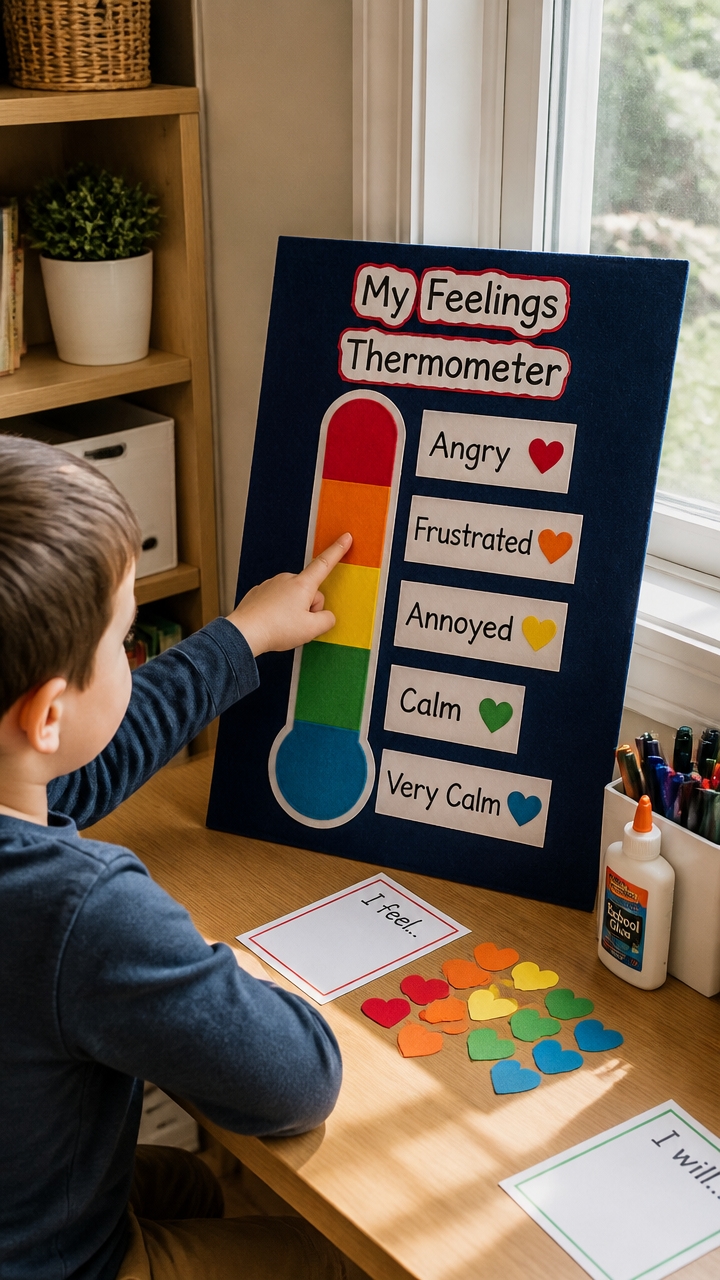
Feeling of all sizes can be unforgettable, especially when you use feelings thermometers to show how strong emotions are. Use a feelings thermometer with colors like green, yellow, and red to help your child understand their emotions. Helping your child label feelings this way boosts self-awareness and confidence, making emotional conversations safe, simple, and meaningful. It’s a comforting, bonding tool that encourages calm.
Activities for Practicing Feelings Recognition With Printable Charts
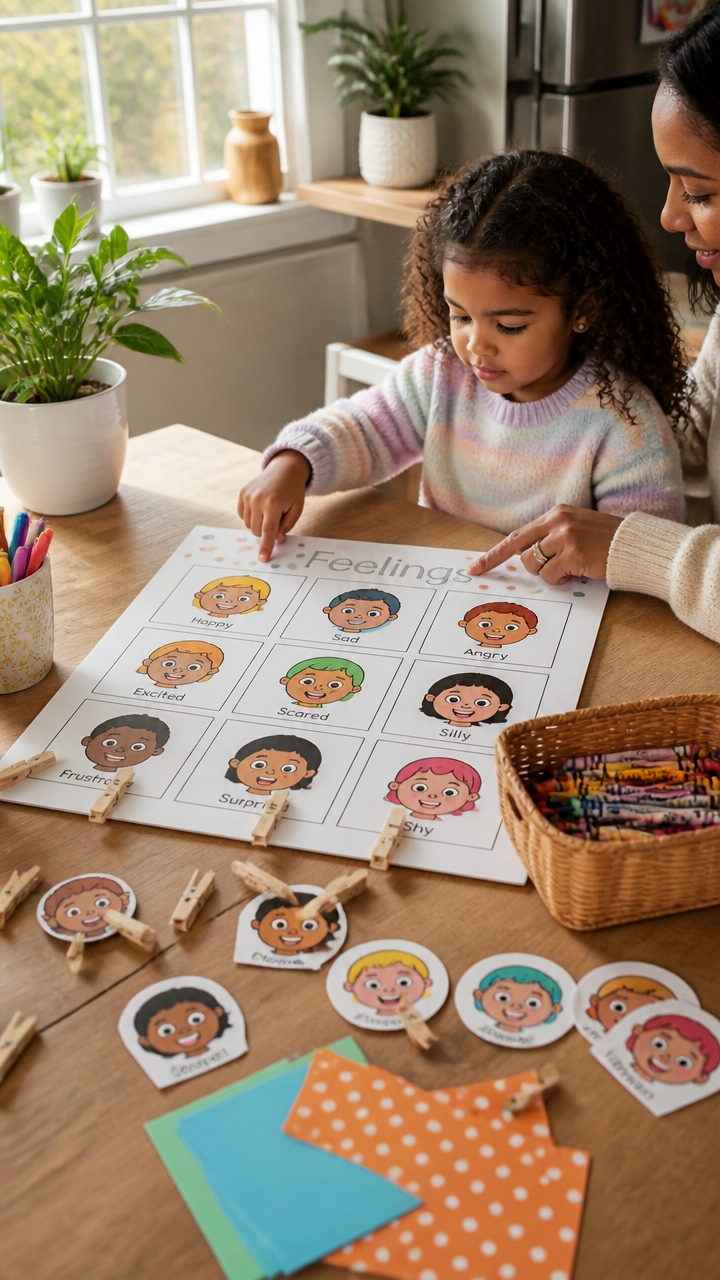
Laughter, bonds, and unforgettable moments happen when you use printable feelings charts to help your child recognize emotions. Create colorful printable charts with animals, emojis, or photos, and keep them handy. Play matching games or daily check-ins. It’s a simple way to guide recognizing feelings, normalize discussions, and strengthen emotional understanding in a safe, fun way your family will love.
Role-Playing With Feelings Charts to Build Empathy and Social Skills
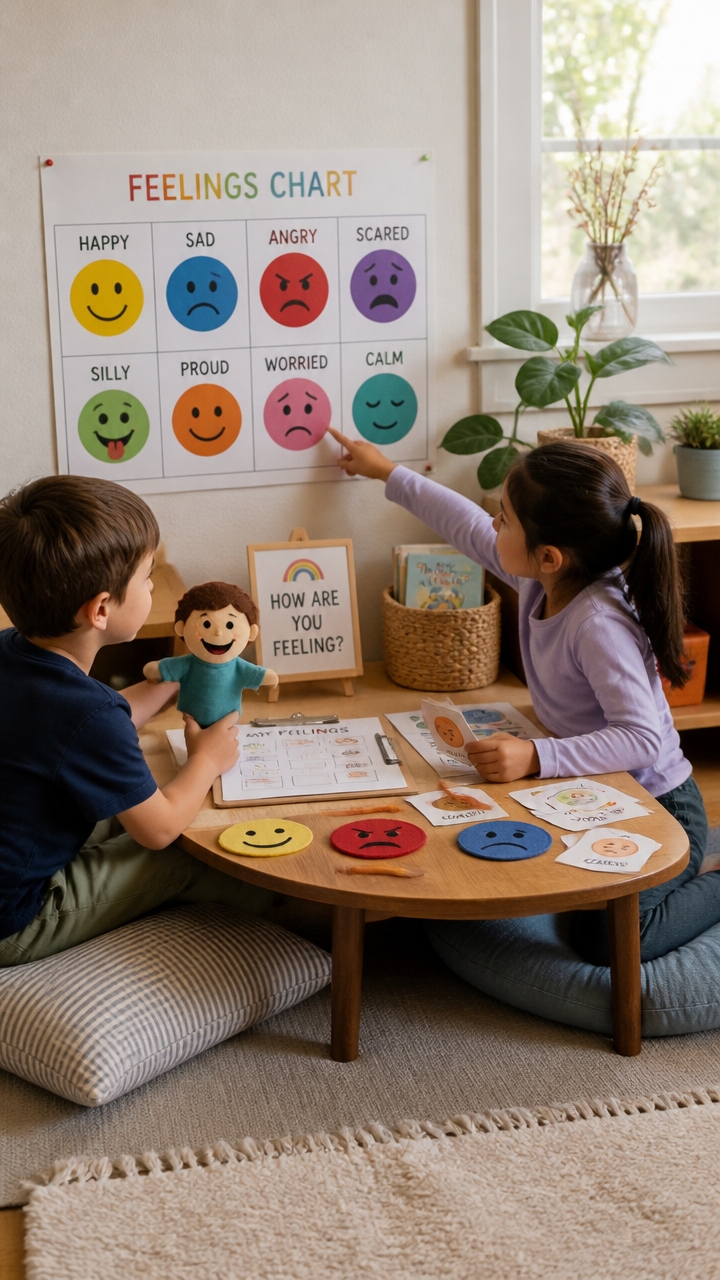
Building on feelings charts, role-playing is a powerful way to turn emotions into fun, hands-on learning moments your family will remember. Use puppets or dolls to model emotional vocabulary, and improvise scenarios that help your child identify feelings safely. It’s a great way to boost empathy, improve social skills, and make understanding emotions a delightful, unforgettable experience.
Adapting Feelings Charts for Older Kids and Tweens
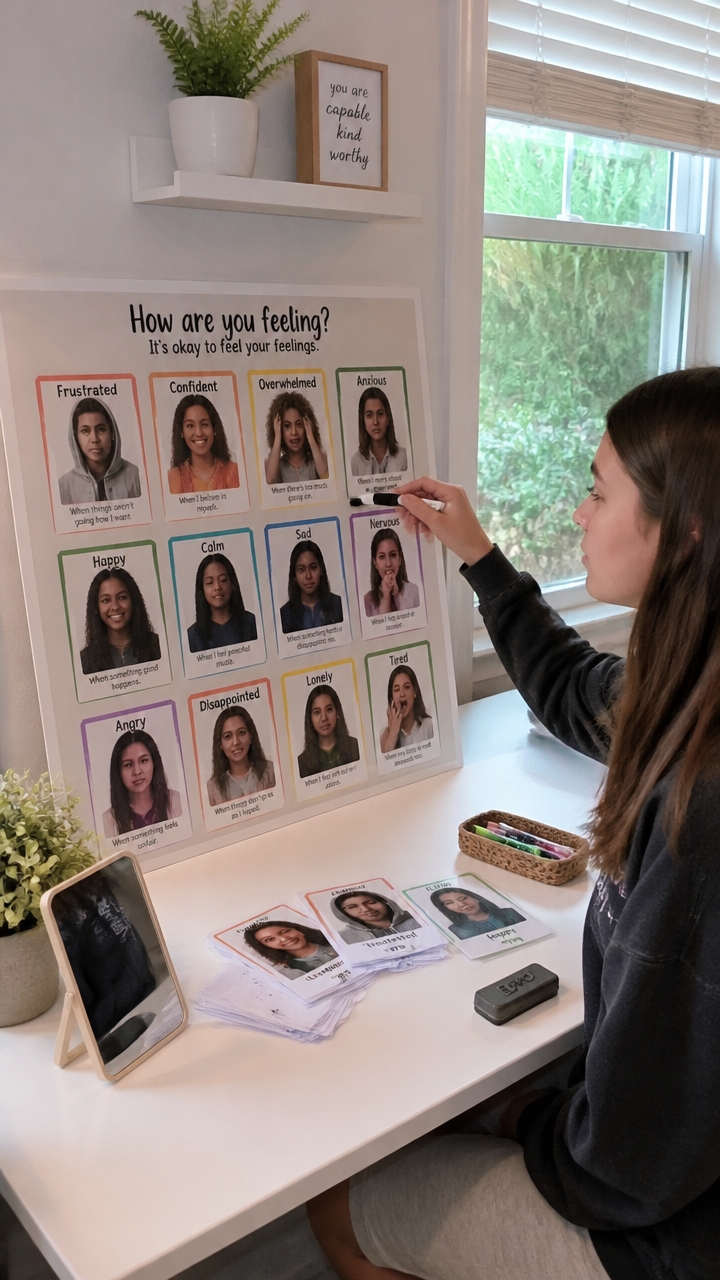
To keep older kids engaged, try transforming feelings charts into more mature, relatable tools that suit their interests. When adapting feelings charts, use real-life photos or sophisticated illustrations, include emotional vocabulary like feelings wheels, and encourage them to co-create. It’s a great way to boost understanding and ownership, making emotional learning both safe and meaningful.
Co-Designing Feelings Charts With Kids for Better Engagement
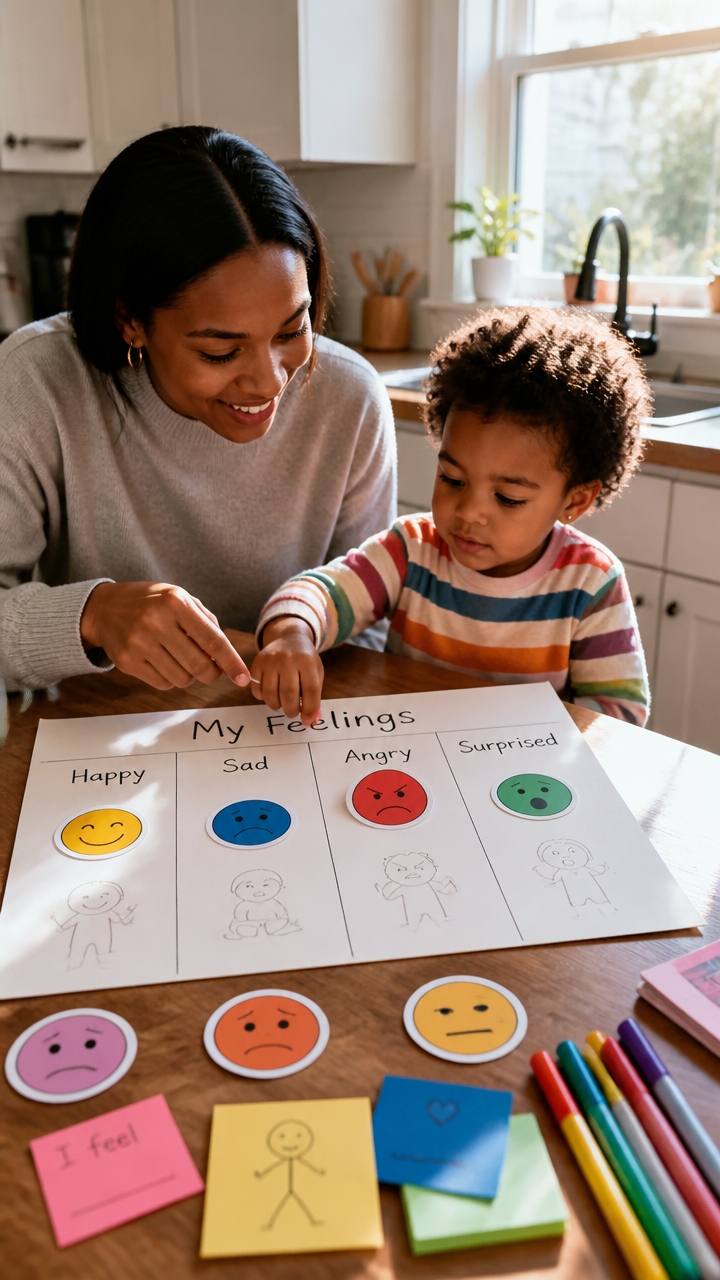
Creating feelings charts with your kids can turn a simple tool into a meaningful activity that sparks connection and understanding. When you co-design, involve your children in choosing emotions, visuals, and personal touches. It’s a great way to boost emotional literacy, encourage collaboration, and make the chart truly theirs, leading to more frequent, joyful check-ins and unforgettable family moments.
Using Feelings Charts During Morning Meetings or Circle Time
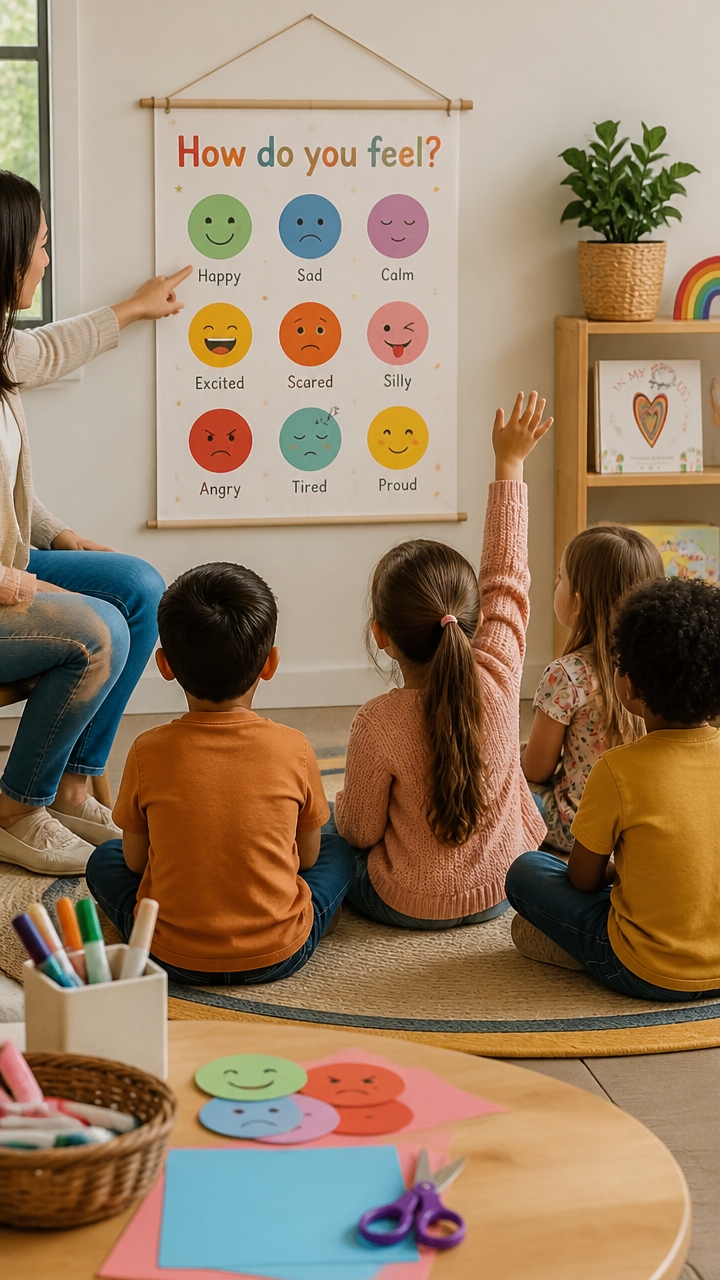
Starting your day with feelings charts at morning meetings or circle time can set a positive tone and make children feel heard. Use feelings charts for emotional check-ins, letting kids identify how they feel. You can ask simple questions like, “How are you today?” It’s a calming way to build bonds, promote honesty, and create a safe space for sharing feelings.
How to Use Feelings Charts for Emotional Check-Ins at Home
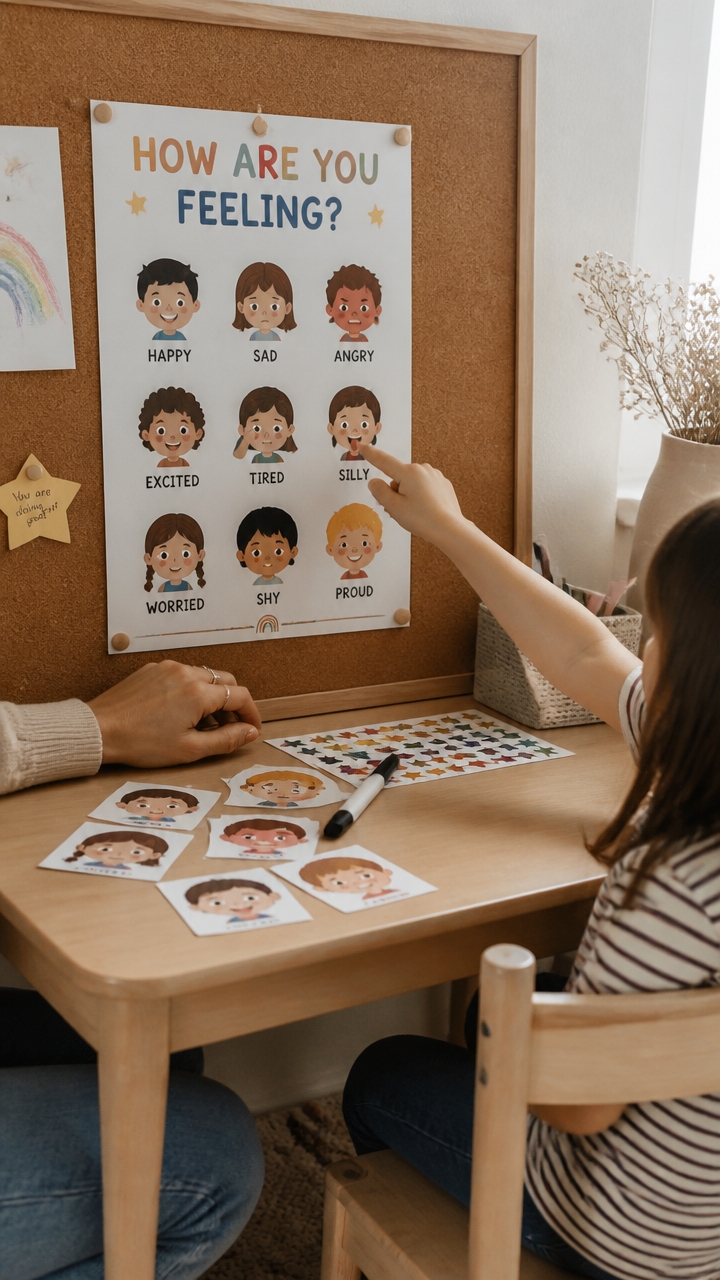
Feeling comfortable sharing your child’s emotions at home can create bonds filled with laughter and understanding. Use a feelings chart daily for emotional check-ins, ask, “How are you feeling today?”, and encourage honest answers. Place the chart in visible spots, like the fridge or bedside table, so your family can connect, calm down, and strengthen those unforgettable moments.
Connecting Feelings to Needs to Support Problem-Solving
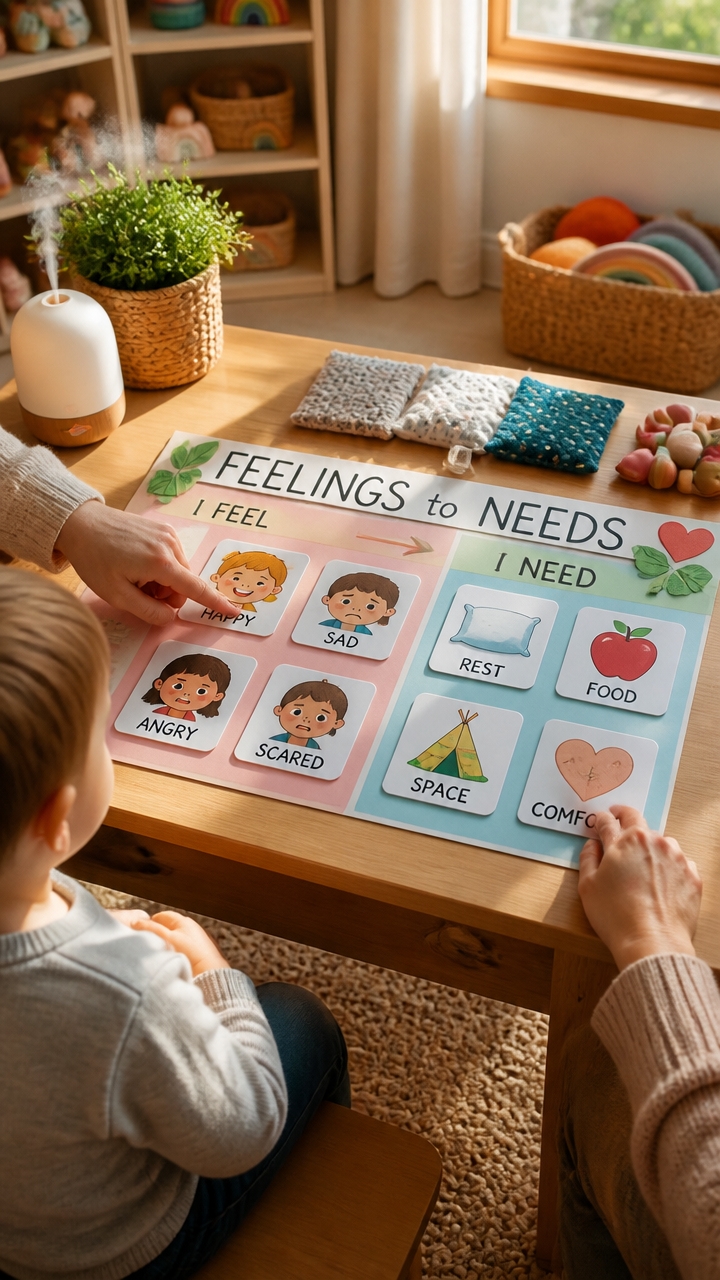
When your child feels upset or frustrated, pairing those feelings with what they need can make a big difference in solving problems and building emotional strength. Connecting feelings to needs helps kids identify what helps them feel safe, comfortable, and understood. Use feelings charts and simple activities, like asking, “When sad, what do you need?” to promote healthy coping strategies and confidence.
Using Feelings Charts to Promote Self-Regulation Skills
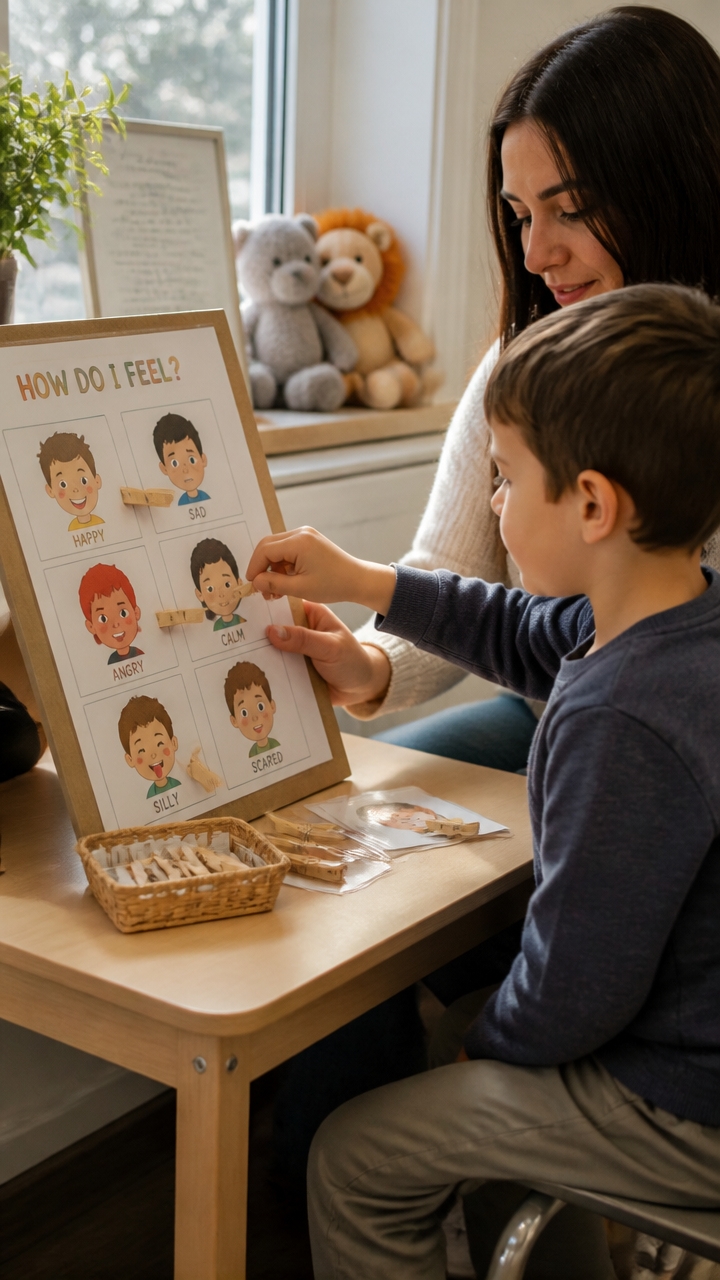
Using feelings charts is a wonderful way to help your child develop self-regulation skills and manage emotions calmly. Create a feelings chart with simple words and colorful images, encouraging your child to identify emotions regularly. Use feelings thermometers to gauge intensity, and practice pointing to feelings during calm moments. It’s a safe, fun tool for better emotional understanding and stronger bonds.
Overcoming Resistance: Helping Kids Use Feelings Charts Without Jokes
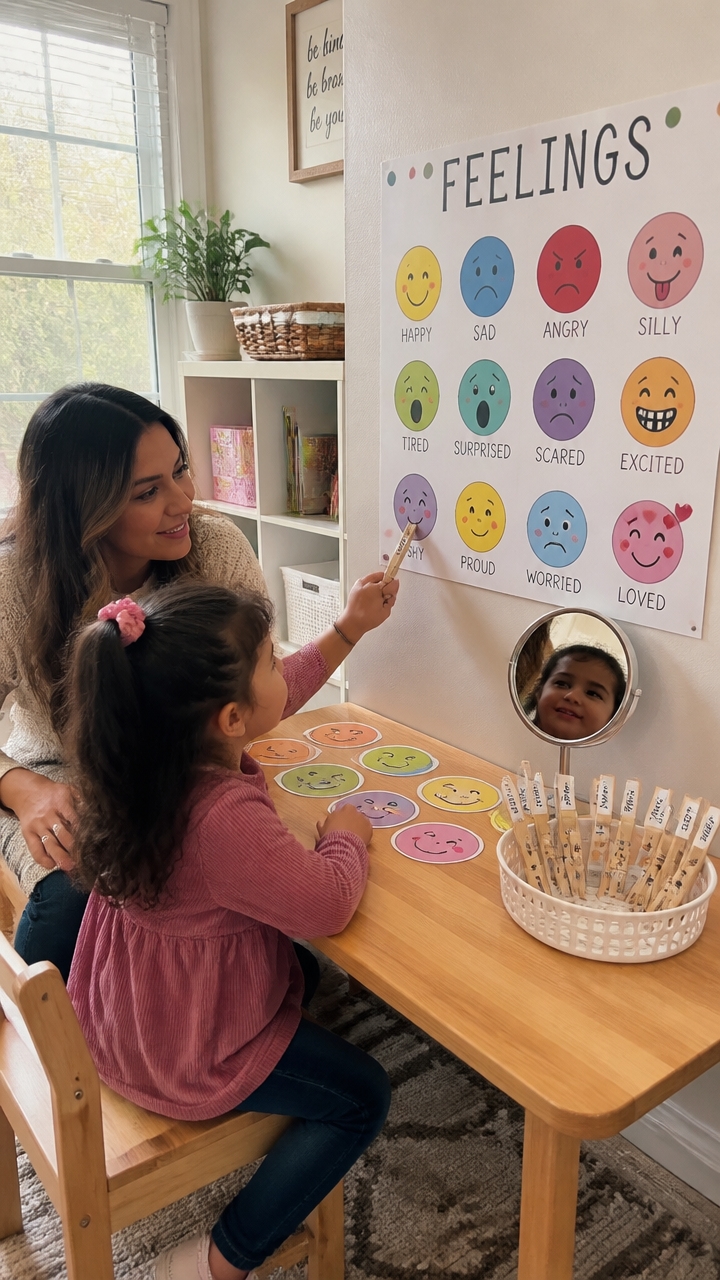
Bringing a calm, steady vibe helps kids see feelings charts as helpful, not threatening. Help them feel safe by modeling chart use during calm moments, showing charts help identify emotions. Use playful activities like puppet shows or role-playing, which help kids relate to the visuals. A simple start with core emotions prevents overwhelm, making charts help build confidence instead of jokes.
Extending Emotional Learning With Books and Stories About Feelings
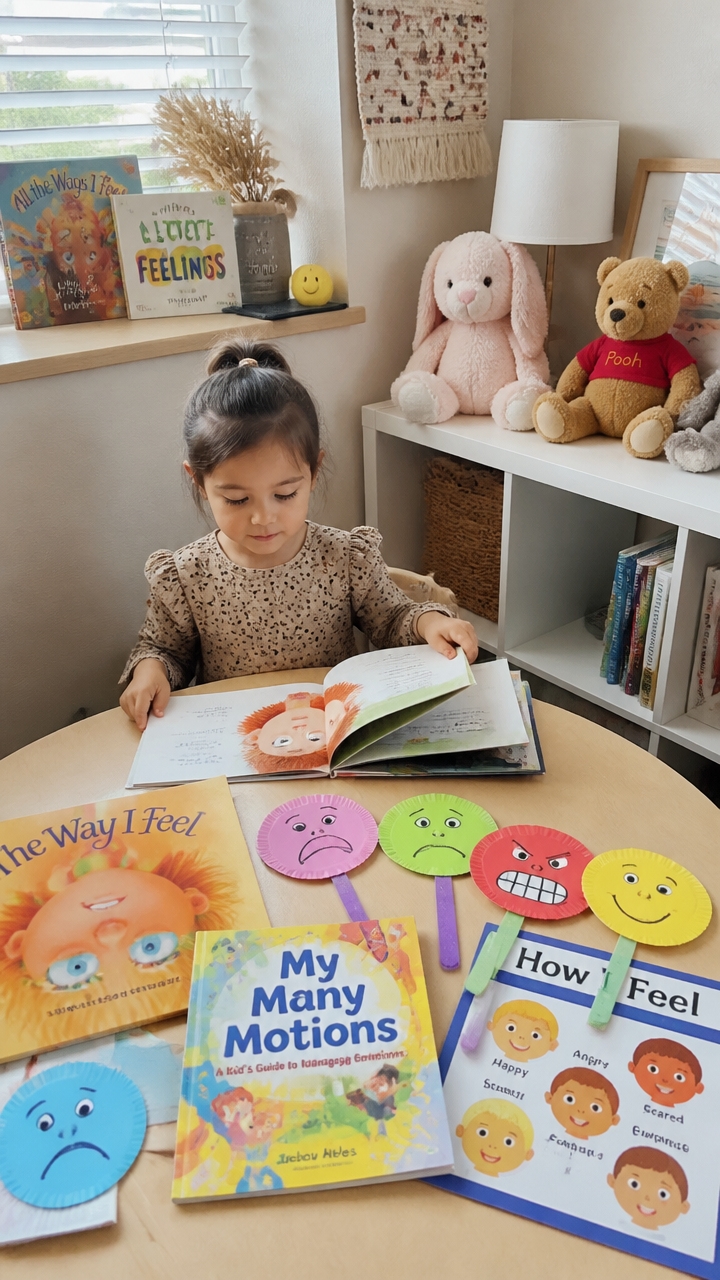
Sharing stories about feelings is a wonderful way to create a warm, memorable bond with your kids. Use books with relatable characters to expand emotional vocabulary, helping children understand complex feelings. Encourage discussions after the story, and perhaps draw scenes or role-play emotions. It’s a gentle way to deepen your family’s emotional connection and make feelings charts more meaningful and memorable.
Using Puppets and Dolls to Make Feelings Charts More Engaging
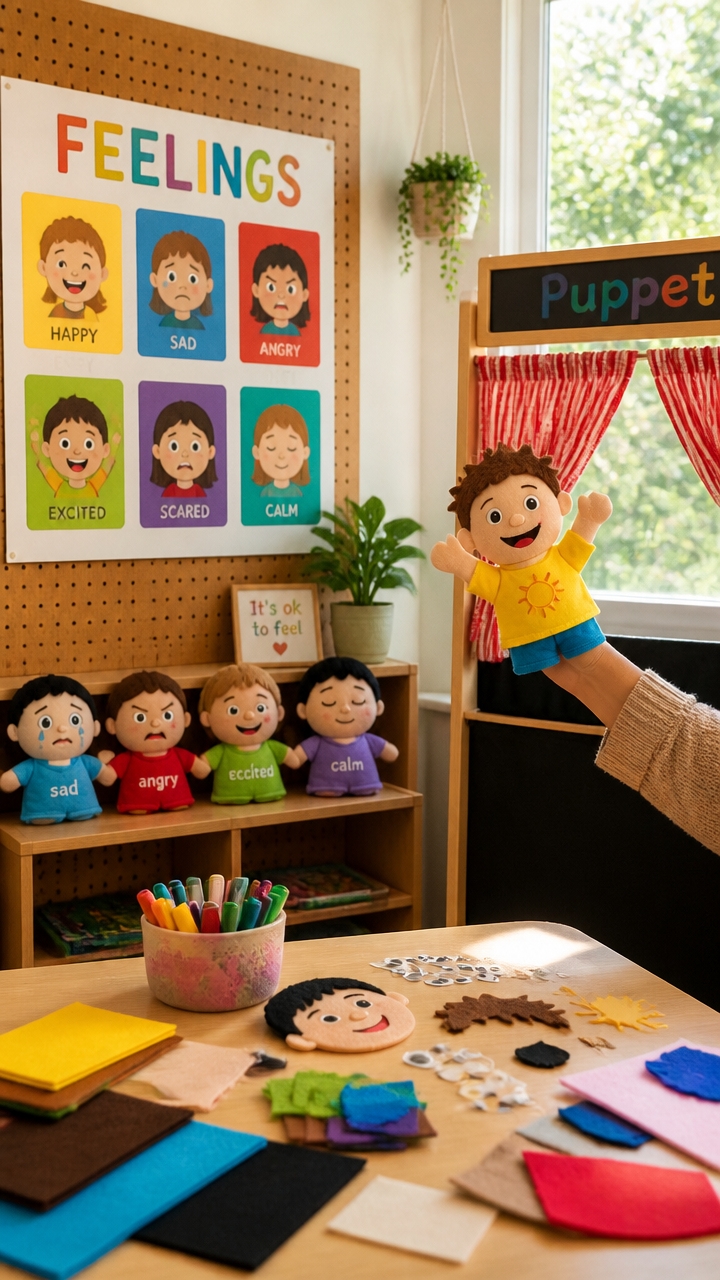
Gather your puppets and dolls, and get ready for some unforgettable emotional fun. Using puppets, you can create scenes that help kids practice naming feelings, deepening understanding. This simple activity encourages children to verbalize emotions in a safe space. It’s a great way to make learning joyful, fostering bonds, laughter, and emotional growth through playful, engaging role-playing.
Using Feelings Charts to Foster Social Skills and Peer Understanding
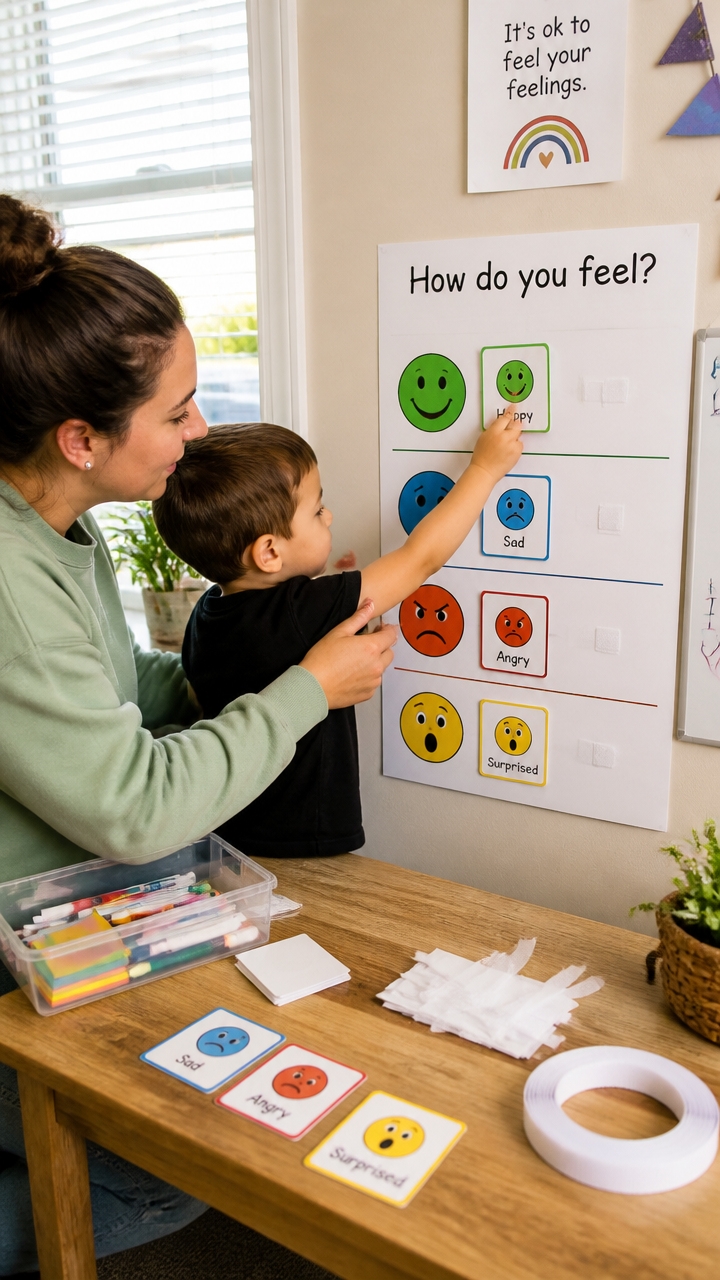
Using feelings charts in playtime is a wonderful way to build social skills and deepen peer understanding. You can encourage kids to understand their feelings by pointing to emotions, sharing stories, or acting out scenes. It’s a great way to boost social-emotional learning, foster empathy, and strengthen friendships. Keep it fun, warm, and safe, laughter and bonds will follow, unforgettable moments included.
Expanding Emotional Vocabulary With Feelings Wheel Activities
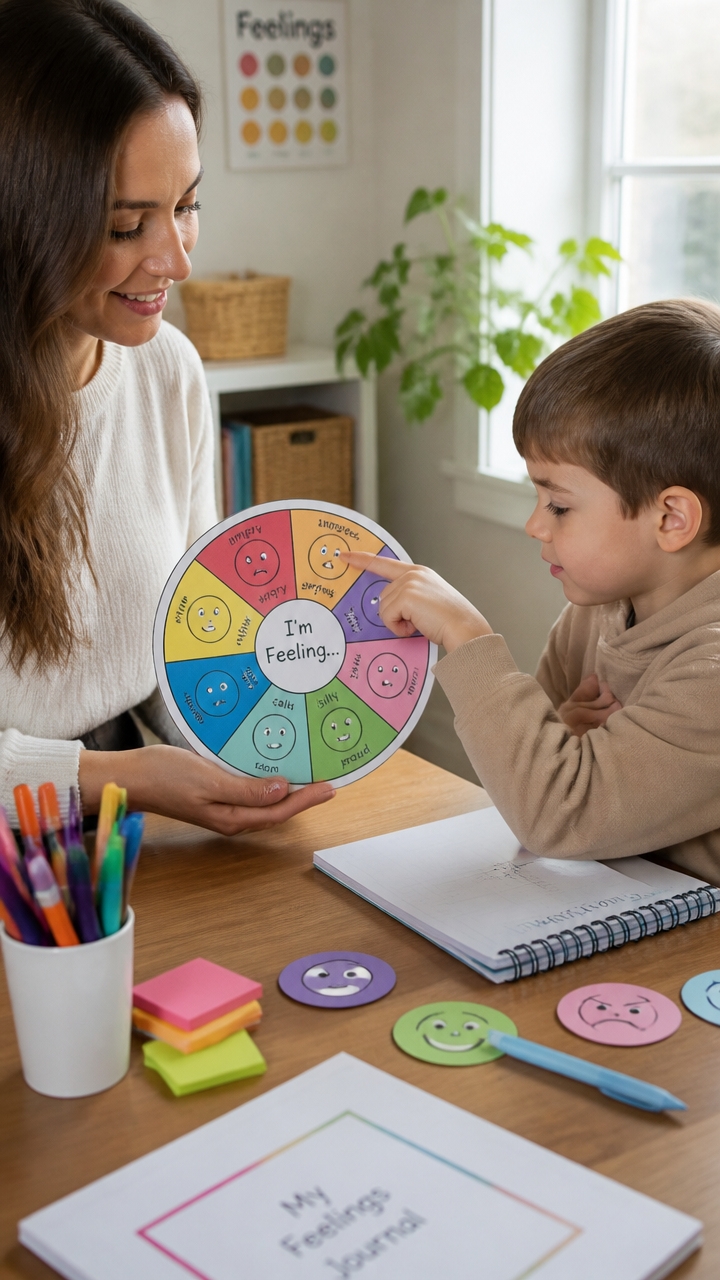
Building on feelings charts, it’s fun to explore how a feelings wheel can expand your child’s emotional vocabulary. Use the feelings wheel, encouraging your family to identify complex emotions, like disappointment or pride. Create personal stories or role-plays with simple scenes, helping kids articulate feelings more clearly. It’s a warm way to strengthen bonds and promote deeper emotional understanding.
Troubleshooting Common Challenges With Feelings Charts in Classrooms
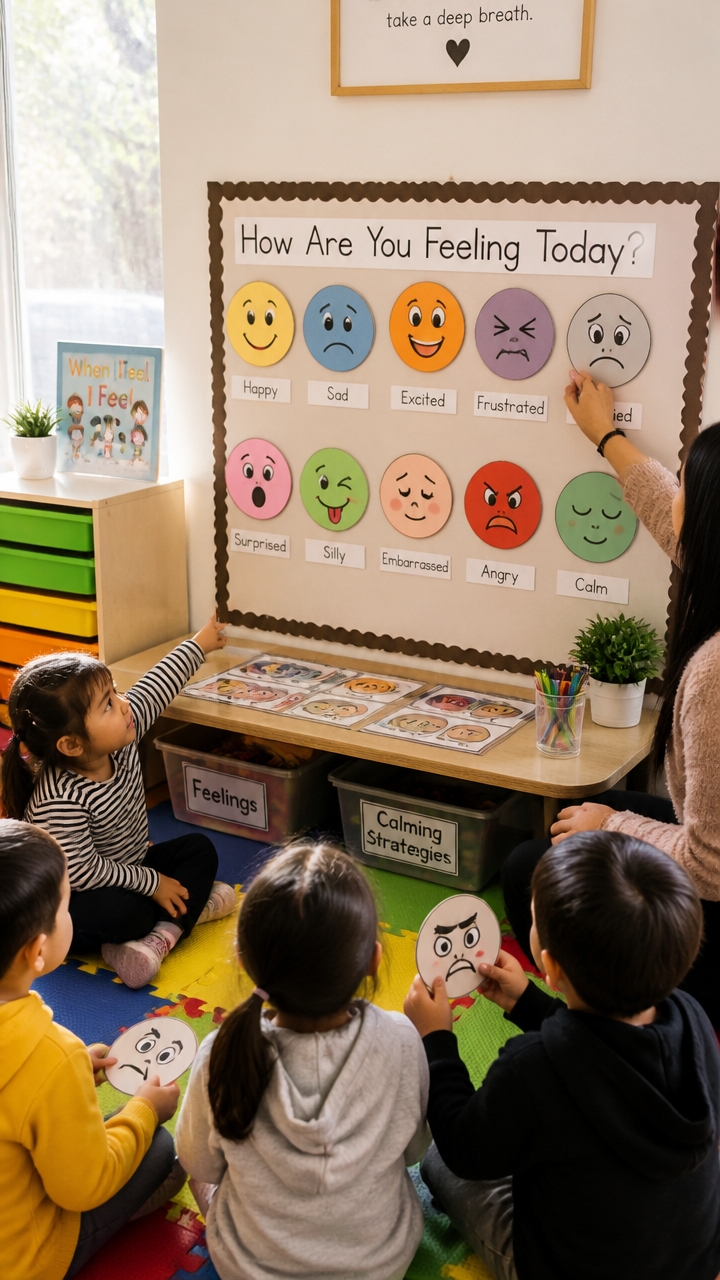
Facilitating feelings charts in your classroom can sometimes lead to challenges, but don’t worry, there are simple ways to solve them. Troubleshooting emotional issues begins with involving students in the process; enhance charts with diverse vocabulary and use puppets or figurines to make emotions clearer. Regular check-ins help guide kids, ensuring feelings are expressed safely and openly, creating a warm, supportive environment.
Tracking Emotional Growth Over Time Using Feelings Charts
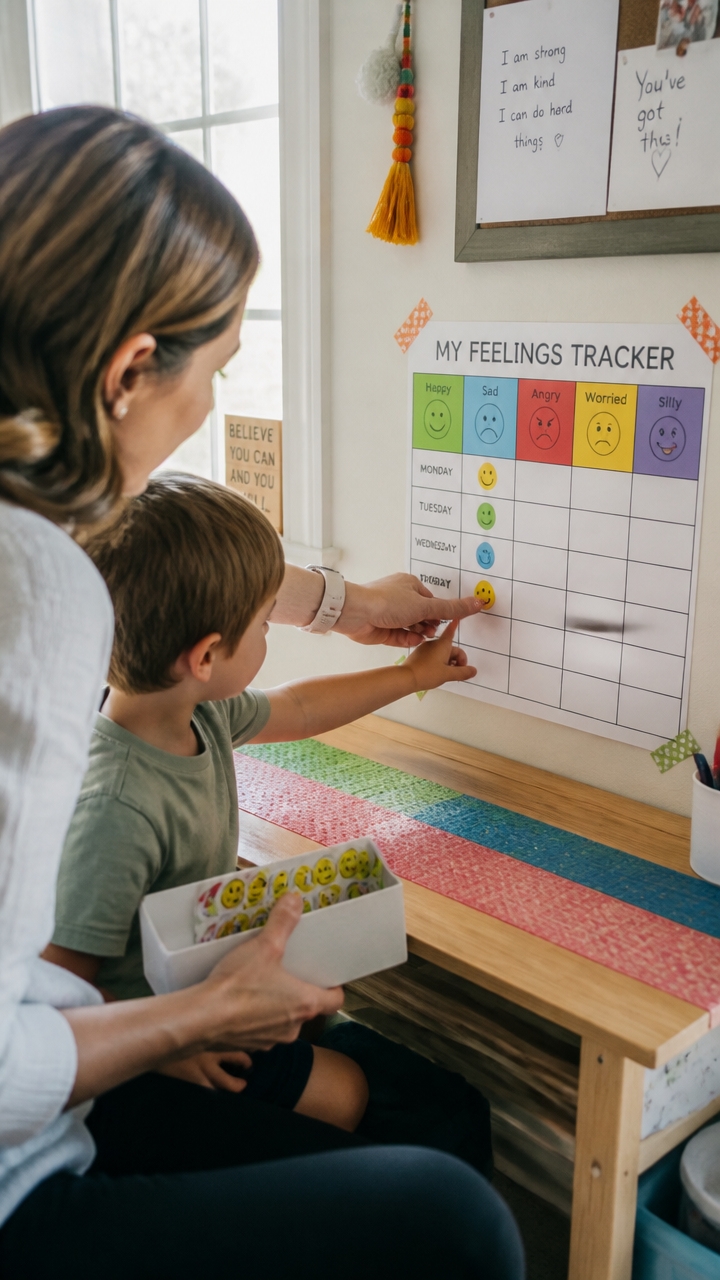
Most importantly, tracking emotional growth over time can be an unforgettable journey for you and your kids. Use a feelings chart daily, encourage your child to mark feelings honestly. Regular reviews help spot trends, celebrate progress, and set goals. Use colorful markers, stickers, or drawings, whatever makes your child excited to share. It’s a calm, safe way to grow closer and understand feelings.
Free Resources and Printable Feelings Charts to Get Started Today
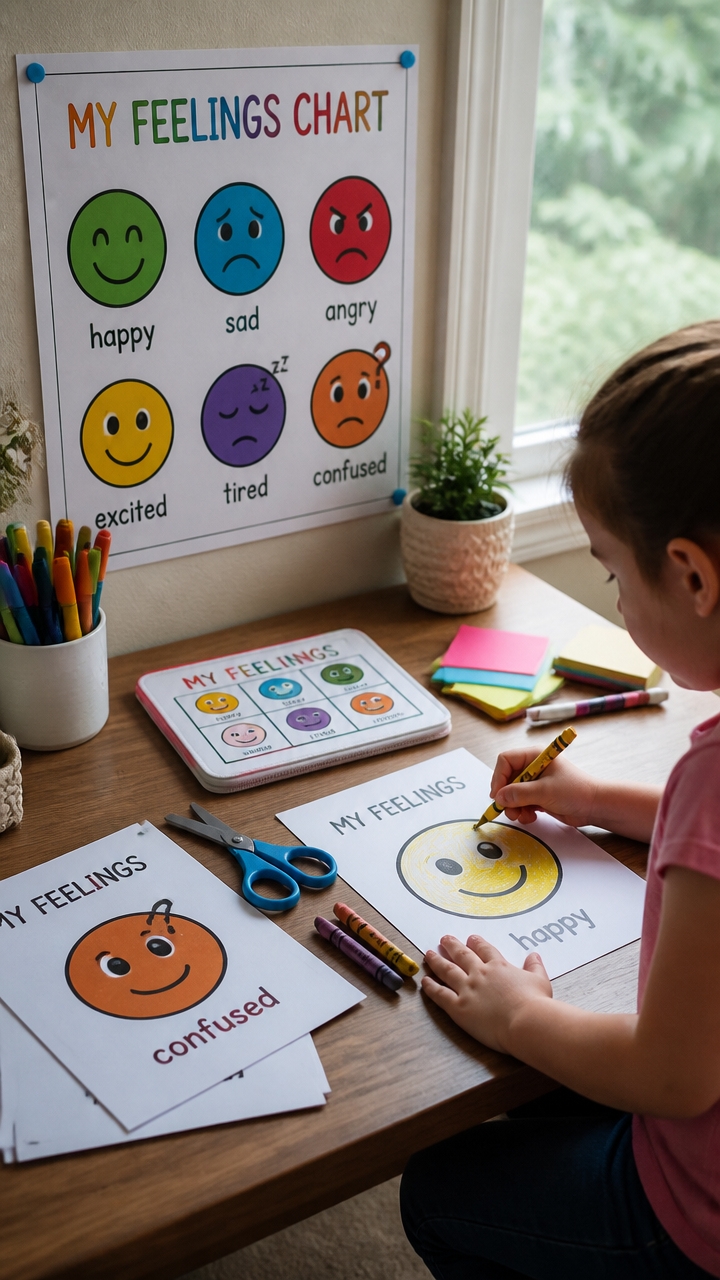
Creating a toolbox of free, printable feelings charts can turn emotional learning into a joyful adventure for your family. Use free resources like feelings printables with animals, emojis, or photos, which make recognizing emotions fun and engaging. Bilingual options support your child’s language needs. It’s a simple, safe way to normalize open conversations about feelings at home and school.
Final Takeaways
Feeling all these emotions is completely normal, and using feelings charts is a wonderful way to build stronger bonds and create happier days together. Engaging in simple activities like drawing funny faces with crayons, sticking smiley stickers, or sharing silly stories makes emotional learning both fun and accessible for children. These activities help kids recognize and express their feelings, which is proven to lead to fewer behavior issues and greater emotional resilience.
Incorporating feelings charts and related activities into your family, classroom, or homeschool routine is an easy, creative way to foster emotional awareness and communication. When children understand and name their emotions through colorful crafts or playful games, they develop essential social skills while having a great time. Making emotional learning a regular part of your routine not only encourages meaningful connections but also creates unforgettable moments filled with laughter and warmth that can last a lifetime.